Colon cancer
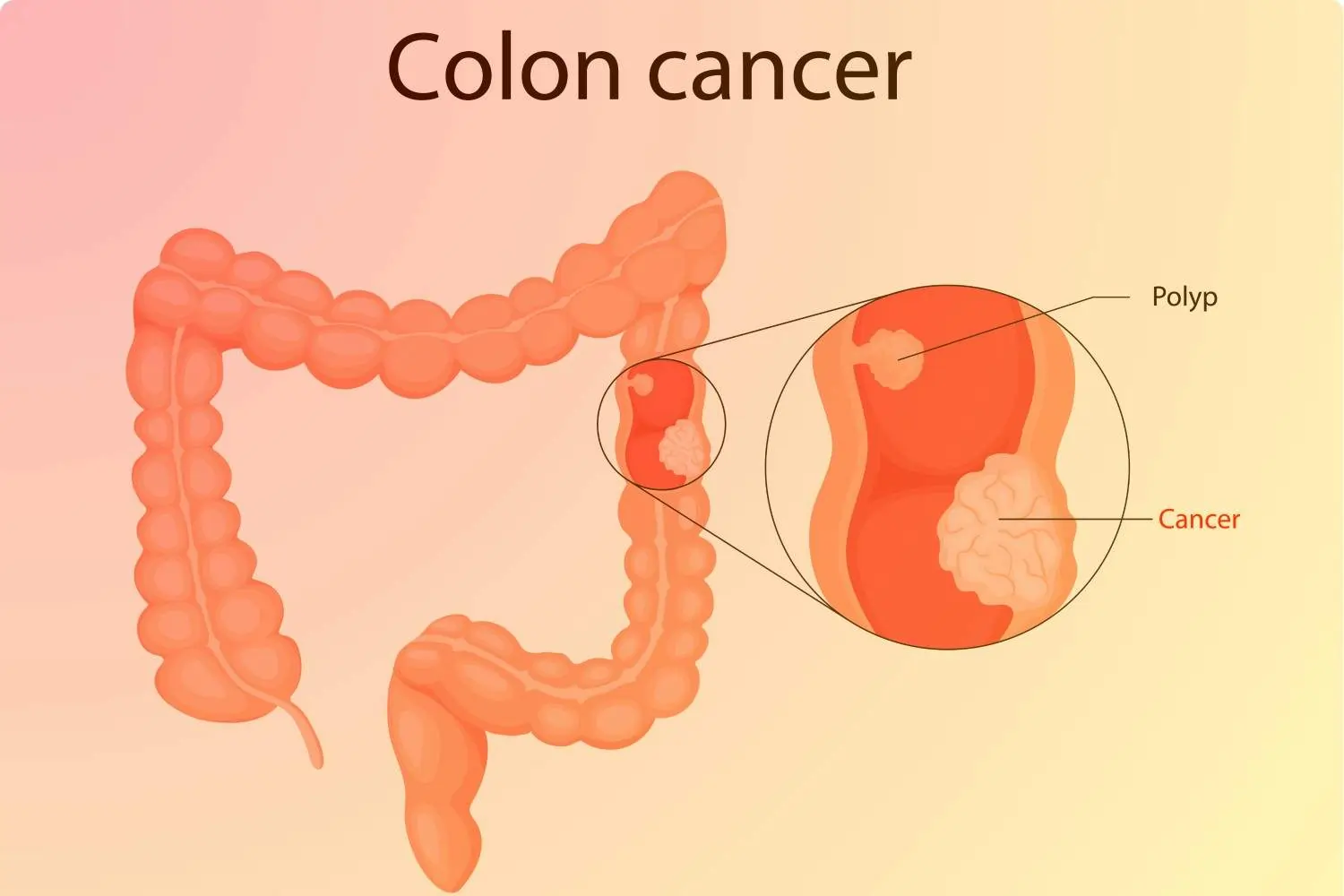
Is a type of cancer that begins in the large intestine. It usually begins as small, non-cancerous clumps of cells called polyps that form on the inside of the colon.
Symptoms
- A persistent change in your bowel habits including diarrhoea or constipation or change in the consistency of your stool
- Rectal bleeding or blood in your stool
- Persistent abdominal discomforts such as cramps, gas or pain
- Feeling that your bowel doesn’t empty completely
- Weakness or fatigue
- Unexplained weight loss
Causes
Colon cancer begins when healthy cells in the colon develop changes in their
DNA.
A cell’s DNA contains a set of instructions that tell a cell what to do.
Healthy cells grow and divide in an orderly way to keep your body functioning
normally.
But when a cell DNA is damaged and becomes cancerous, cells continue to divide even
when new cells aren’t needed.
As cells accumulate, they form a tumour.
With time, the cancer cells can grow to invade and destroy normal tissue nearby and
cancerous cells can travel to other parts of the body to form deposits.
Risk Factors
- Old age
- History of colorectal cancer or polyp
- Inflammatory intestinal condition
- Inherited syndromes
- Family history of colon cancer
- High-fat diet, sedentary lifestyle
- Diabetes, Obesity, alcohol
- Radiation therapy for cancer
Homoeopathic Invention
As per the latest research in homoeopathy,
- Oesophageal Cancer: Conflict related to
the oesophagus is “not
being able or not being allowed to swallow a morsel”.
Eg: One had expected a job, position, an inheritance, a proposal, but is unexpectedly not able to get.
A promise that has not been kept, something of personal value that has been taken away from projects or plans one is unable to carry. - Colon Cancer: Conflict-related is “Not
being able to absorb or
digest a morsel”.
Conflict is experienced as anger, about a person, friend, neighbour, a situation, relationship or accusations, insults, criticism or news that is hard to take or difficult to digest. Also, ugly fights over money, over a property, ugly divorces, court cases or betrayals can cause it. - Stomach and Duodenum Cancer:
Conflict-related is an
indigestible morsel conflict. Male territorial anger conflict or a female
identity conflict.
Territorial anger relates to anger in the environment places which one considers as his/her domain.
Eg: Disputes at home, frauds at the workplace, anger at school, battles over property or land etc.
- Identity Conflict: Means inability to establish one’s position or place (“territory”). An unwanted move, change of school, or change of a workplace can activate the conflict. Feeling unsettled, not knowing where to belong, not finding one’s place in a relationship, within the family, the group at work, or in the culture and society.
Homeopathic Approaches
Are progressively administered to an individual since they act on more than one
condition of the body.
Homoeopathic treatment may provide some relief from the side effects of conventional
cancer treatment.
For Cancer
Homoeopathic practitioners aim to stimulate immunity, lessen pain and improve energy and overall well-being especially if a person is grappling with the side effects of chemotherapy and radiation such as nausea, hot flashes, infections and sores.


Medicines
Homoeopathic Medicines
Arsenic Album :
Alopecia appears as circular bald patches along with severe itching and burning . Complaints are worse at night. The scalp is very sensitive.
Silicea :
Indicated for alopecia in young people. A bald patch appears at the back of the scalp. They sweat a lot. They have sweaty palms and soles.
Mezereum :
It’s the best-indicated remedy in homeopathy for hair fall. It helps in the new growth of hairs. It is suited especially when hair fall starts after any febrile illness like typhoid, malaria, etc.
Phosphorus :
Alopecia in patches is mostly indicated. Dandruff is also present on the scalp. Itching in the scalp is also severe. Hair fall from the forehead is prominent with receding hairline.
Lycopodium :
Receding hairline, male–pattern baldness, alopecia in young people.