
Vertigo
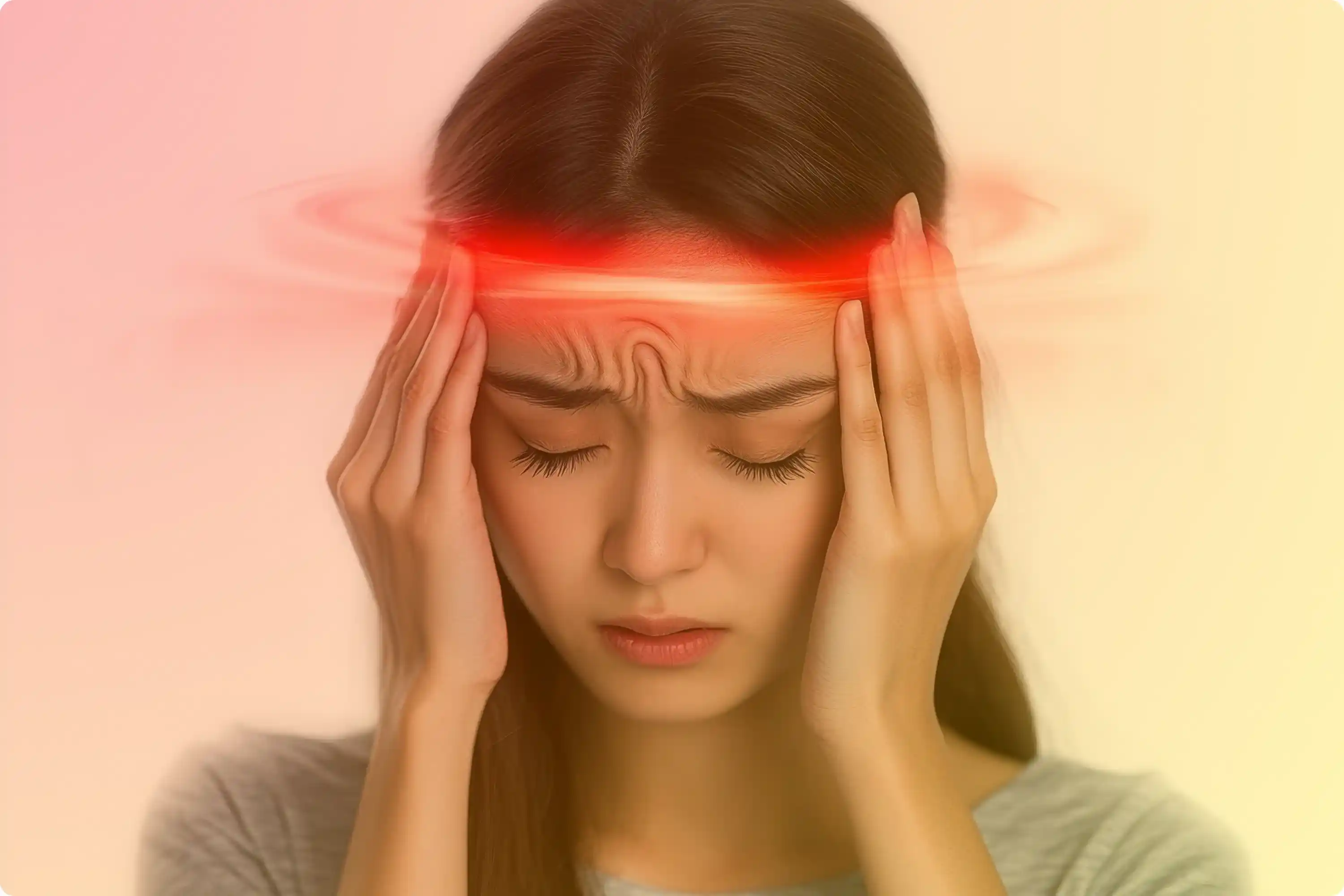
A sudden internal or external spinning sensation ,often triggered by moving your head too quickly. It’s a sensation of feeling off balance. It can happen when there is a problem with the inner ear,brain,or sensory nerve pathway.Dizziness ,including vertigo can happen at any age,but it is common in people aged 65 yrs or over.
Symptoms of Vertigo
- Swaying or tilting sensation
- Feeling pulled to one direction
- Lightheadedness
- Balancing problems
- A sense of motion sickness
- Nausea and vomiting
- Ringing in the ear or hearing loss
- Fullness in ears
- Headaches
- Nystagmus (eyes move uncontrollably, usually from side to side)
Causes of Vertigo
- BPPV (Benign Paroxysmal Positional Vertigo): Occurs when tiny calcium particles (canaliths) are dislodged and collect in the inner ear, disturbing signals to the brain about head and body movement, affecting balance.
- Meniere’s Disease: Caused by a buildup of fluid and changing pressure in the ear; leads to hearing loss, episodes of vertigo, and ringing in the ears.
- Vestibular Neuritis or Labyrinthitis: Usually related to a viral infection, which causes inflammation in the inner ear around nerves responsible for balance.
- Cholesteatoma: Noncancerous skin growth in the middle ear (typically due to repeated infections); as it grows behind the eardrum, it may damage ear structures and cause hearing loss and dizziness.
Homeopathic Perspective
As per the latest research, conflicts related to the vestibular organ are considered "balance conflicts," more precisely a "falling conflict." This can stem from personal falls, witnessing others fall, or hearing about such incidents. It can also be experienced as a "fall from grace" or a sense of separation, defeat, or loss.
Homeopathic Scope in Vertigo
Homoeopathy offers effective solutions for different types of vertigo and can treat them successfully in a relatively short period.
- Gelsemium: Top medicine for extreme dizziness with dim vision and heaviness of eyelids. Suitable when vertigo causes loss of balance and difficulty walking.
- China: Best for vertigo after blood loss or loss of vital fluids (e.g., diarrhoea, anaemia). Helpful when you feel weak and dizzy, and walking is difficult.
- Conium: Suitable for elderly individuals whose vertigo worsens with side-to-side head movement or motion in bed. Feels as if moving in a circle.
- Belladonna: When vertigo worsens with changes in position. May fall to the left or backward, often with acute headache and heat sensations.
- Cocculus: Vertigo with nausea and vomiting, especially when rising from bed or sitting. Nausea worsens with travel.
- Cyclamen: Best when visual disturbances accompany vertigo (e.g., double vision, dim vision, light flashes). Feels as if surroundings are revolving in a circle.