

Allergic Rhinitis
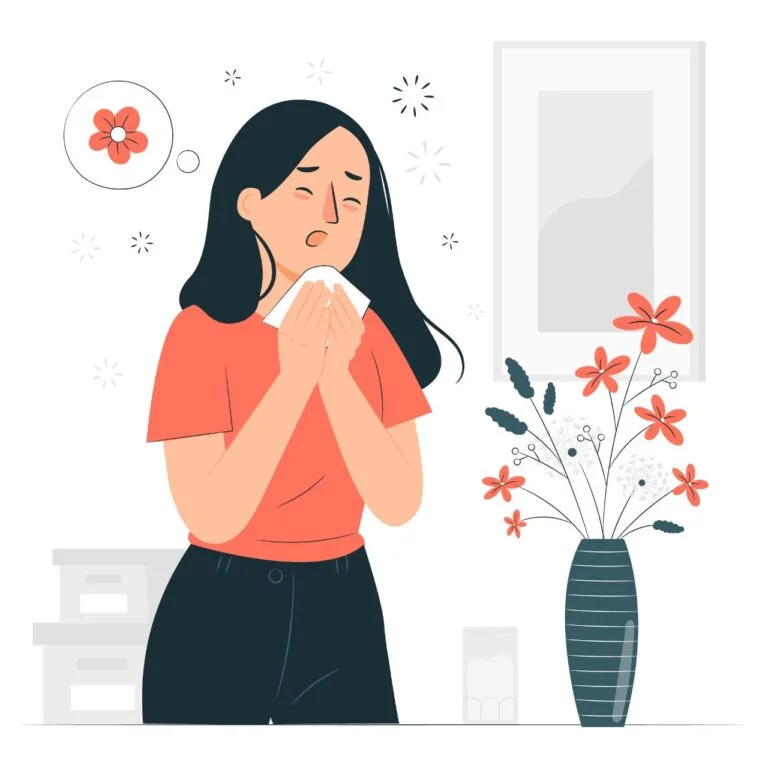
Allergic Rhinitis is a usually harmless allergic reaction in your nose. It can be treated with medicines from a pharmacist. It causes irritation in your nose or sneezing, or a few other reactions we will discuss in a later section. Allergic Rhinitis, also known as hay fever , is a reaction that is caused when your body repels a certain thing. The reaction usually takes only minutes to appear after you come in contact with the allergen. Once you know what you feel uneasy and uncomfortable around, try to avoid it at all costs. These reactions can sometimes last up to days and only be treated by medicines.
Causes of Allergic Rhinitis
There are a few main causes for this reaction, but these are not the only ones to do so. There are many other things out there you might feel uncomfortable and allergic around. Contact a doctor immediately if you feel like you don’t know what is happening to you. Below listed are the main causes of Allergic Rhinitis:
This is the allergen most people get affected around. It is the most common seasonal energy. Some flowering plants like roses and trees like pear trees and cherry trees do not cause pollen allergy.
This is an allergic reaction to tiny little bugs that live in the house dust. Many people with dust mite allergy also face early signs of asthma, like difficulty in breathing and wheezing.
Cat allergies are very common, more common than dog allergies, in fact. This may cause a runny nose or asthma.
This can be caused by the skins of numerous animals like cats, dogs, horses, cattle, rabbits, hamsters, guinea pigs etc. This causes similar symptoms as that of cat saliva, most of the time.
There are thousands of types of molds. There is a possibility that you are allergic to one or a few of them, or you cannot stand all of them. Mold allergy usually affects the upper respiratory tract. This can cause many severe reactions sometimes as well. Some people may also get Allergic Rhinitis during a period of time of the year since they face seasonal allergies. While for some it might last for a long time, for other people it might even be a matter of minutes or hours.
Symptoms of Allergic Rhinitis
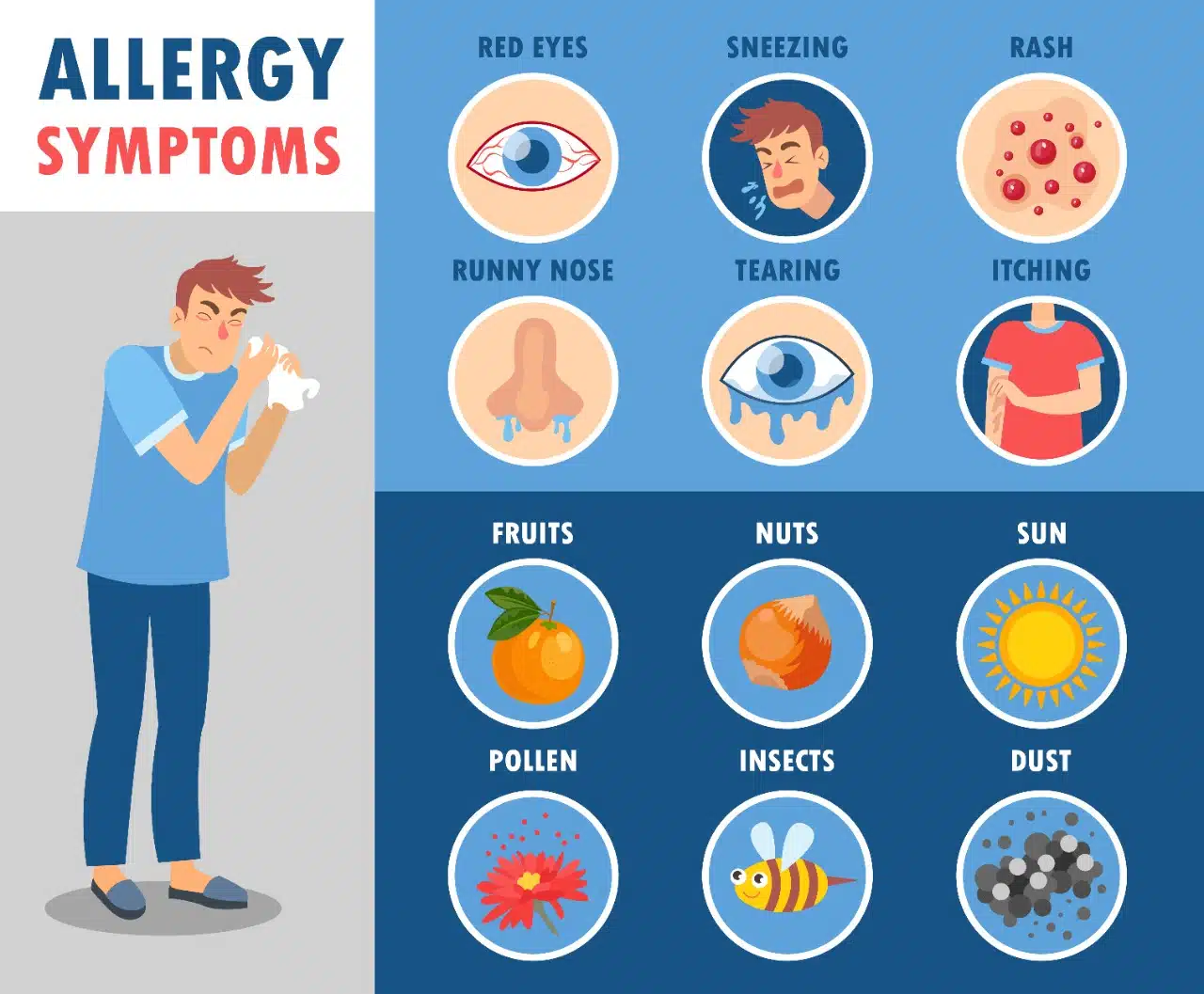
- Sneezing, itchiness or runny nose.
- Stuffy nose.
- An uncomfortable, sore and scratched or itching throat.
- Frequent or persistent headaches.
- Continuous coughing problem due to dry and scratchy throat.
- Dark circles under eyes.
If you experience any of these symptoms, make a point to contact the nearest doctor to you. It might sometimes not feel like much in the beginning, but you have to take action before the situation worsens. It usually proceeds to be more dangerous if action is not taken within a limited time.
Other Risk Factors
- Chemicals
- Cold temperature
- Humidity
- Wind
- Air pollution etc.
There are numerous risk factors like hairspray, perfumes, wood smoke and many more. The above listed were the few mainstream ones. If you feel anything uncomfortable around an allergen, make sure to consult a professional.
Types of Allergic Rhinitis
Based on the duration
Based on Duration
Based on Severity
These are completely managed by certified physicians only. Do not take any action without a prescription or consultation.
Homeopathic Treatment for Allergic Rhinitis
You really want allergies to disappear as quickly as possible since they are so unbearably annoying. One of the safest and most natural ways to treat allergies is through homeopathy. According to the American Academy of Allergy, Asthma, and Immunology, allergic Rhinitis, often known as nasal allergy, affects between 10 and 30 percent of people worldwide and between 20 and 30 percent of Indians.
Homeopathic medicine usually has the rule of ‘like kills like.’ These medicines follow an individualized treatment approach, where when you approach a doctor, they study personal characteristics and history. Following are the medicines that are commonly prescribed by a homeopathic professional for your allergic reactions:
Do not take these medications without a prescription. This is for informational purpose only.


Medicines
Homoeopathic Medicines For Bronchitis :
Bryonia :
This remedy is often indicated when a cough is dry and very painful. The person feels worse from any movement. My mouth is very dry, thirsty.
Causticum :
Bronchitis with a deep, hard, racking cough. The person feels that mucus is stuck in the throat and upper chest, and may cough continually to try to loosen it. A feeling of rawness and soreness.
Pulsatilla :
Bronchitis with a feeling of weight in the chest, and a cough with choking and gagging that brings up thick yellow mucus. The cough tends to be dry and tight at night, and loose in the morning.
Antimonium Tart :
This remedy is indicated when the person has a feeling of wet mucus in the chest, and breathing makes a bubbly, rattling sound. The cough takes effort and is often not quite strong enough to bring the mucus up.
Calcarea carbonica :
This remedy is often indicated for bronchitis after a cold. The cough can be troublesome and tickling, worse from lying down or stooping forward, worse from getting cold, and worse at night.