
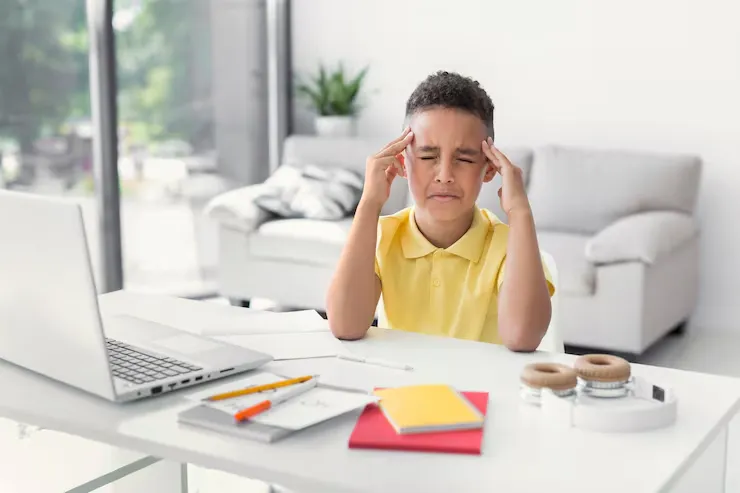

Every child becomes distracted, restless or impatient occasionally. These behaviours can be a normal part of childhood, especially when a child is tired, hungry, excited or adjusting to a new routine. However, ADHD symptoms in childhood form a persistent pattern that affects learning, daily routines, friendships or family life.
ADHD does not mean a child is lazy, badly behaved or poorly disciplined. It is a neurodevelopmental condition involving difficulties with attention, activity regulation and impulse control. Symptoms can look different from one child to another, which is why some children are identified early while others remain unnoticed for years.
This guide explains the signs parents and teachers may observe, how symptoms differ by age and when a professional ADHD assessment should be considered.
What Is ADHD in Children?
ADHD stands for Attention Deficit Hyperactivity Disorder. It is a neurodevelopmental condition that begins during childhood and can continue into adolescence and adulthood.
Children with ADHD may experience difficulties in three main areas:
- Inattention
- Hyperactivity
- Impulsivity
Some children mainly struggle with attention. Others are noticeably restless and impulsive. Many experience a combination of both symptom groups.
ADHD symptoms are considered clinically important when they are excessive for the child’s developmental level, have persisted over time, occur in more than one setting and interfere with everyday functioning.
Book a Child Behaviour Consultation
What Are the Main ADHD Symptoms in Childhood?
ADHD symptoms are grouped into inattentive and hyperactive-impulsive patterns.
Inattentive ADHD symptoms
A child experiencing inattention may:
- Make frequent careless mistakes in schoolwork
- Miss important details in instructions
- Struggle to stay focused during lessons or homework
- Appear not to listen during direct conversations
- Start tasks but leave them unfinished
- Find it difficult to organise schoolwork
- Avoid tasks requiring sustained concentration
- Frequently lose books, stationery, toys or personal belongings
- Become distracted by surrounding sounds or activity
- Forget daily routines, homework or instructions
One forgotten notebook or unfinished assignment does not indicate ADHD. Doctors look for a repeated pattern that is more frequent or disruptive than expected for the child’s age.
Hyperactive ADHD symptoms
A hyperactive child may:
- Fidget with hands or feet
- Squirm while sitting
- Leave the seat during lessons or meals
- Run or climb in unsuitable situations
- Find quiet activities difficult
- Appear constantly active
- Talk excessively
- Struggle to slow down even after reminders
In older children, obvious running and climbing may become less noticeable. Hyperactivity may instead appear as inner restlessness, constant movement, excessive talking or difficulty remaining seated.
Impulsive ADHD symptoms
Impulsivity may cause a child to:
- Blurt out answers before a question is finished
- Interrupt conversations or games
- Find it difficult to wait for a turn
- Grab objects without permission
- Act without considering consequences
- Take unnecessary physical risks
- React strongly before thinking
- Enter other children’s activities without asking
Impulsive actions are not always intentional misbehaviour. Some children understand the rule but have difficulty pausing long enough to apply it.
Three ADHD Presentations in Children
ADHD does not look the same in every child. It may present in three ways.
Predominantly inattentive presentation
The child mainly has difficulty sustaining attention, completing tasks, remembering instructions and staying organised. The child may appear quiet, dreamy or mentally absent rather than disruptive.
Predominantly hyperactive-impulsive presentation
The child mainly shows excessive movement, talking, impatience and difficulty controlling impulses.
Combined presentation
The child has a significant pattern of both inattentive and hyperactive-impulsive symptoms.
The presentation can change as a child develops. Visible hyperactivity may reduce with age while organisation, attention and impulse-control difficulties continue.
ADHD Signs at Home and School
A key part of an ADHD assessment is determining whether symptoms are present in more than one important setting.
| At home | At school |
|---|---|
| Needs repeated reminders for routine tasks | Misses parts of classroom instructions |
| Leaves homework unfinished | Makes avoidable mistakes despite understanding the topic |
| Frequently loses belongings | Loses notebooks, pencils or assignments |
| Interrupts family conversations | Calls out answers or interrupts classmates |
| Struggles to sit through meals | Leaves the seat repeatedly |
| Has difficulty preparing for school | Struggles to organise books and deadlines |
| Reacts before hearing the full instruction | Begins work before understanding the task |
| Moves quickly between activities | Has difficulty completing independent work |
| Becomes frustrated during multi-step tasks | Requires frequent redirection from teachers |
A child may behave differently at home and school because each environment places different demands on attention and self-control. Information from both settings helps build a clearer picture.
ADHD Symptoms by Age
ADHD symptoms in preschool children
Many preschool children are naturally active and have short attention spans. This makes assessment more complex at this age.
Possible concerning patterns include:
- Extreme restlessness compared with children of the same age
- Frequent unsafe climbing or running
- Difficulty participating in even short structured activities
- Intense impulsive behaviour
- Persistent difficulty playing with other children
- Repeatedly leaving supervised activities
- Behaviour that significantly disrupts preschool or family routines
A preschool child should not be labelled based on energy level alone. Sleep, language development, hearing, sensory needs and emotional development should also be considered.
ADHD symptoms in primary-school children
ADHD often becomes easier to recognise after formal schooling begins because the child is expected to sit, listen, organise materials and complete tasks.
Signs may include:
- Repeated complaints about incomplete work
- Difficulty following classroom instructions
- Losing school supplies
- Needing significantly more supervision than classmates
- Frequent classroom interruptions
- Poor time management
- Avoiding reading or written work
- Academic performance below the child’s apparent ability
- Difficulty maintaining friendships
ADHD symptoms in teenagers
In teenagers, visible hyperactivity may reduce, but challenges with planning, organisation and impulse control can become more obvious.
Possible signs include:
- Regularly missing deadlines
- Difficulty studying independently
- Poor time management
- Forgetting assignments or commitments
- Restlessness during long classes
- Impulsive decisions
- Emotional frustration
- Conflict with parents or teachers
- Taking unnecessary risks
- Falling grades despite adequate ability
Teenagers may also experience anxiety, low confidence or demotivation after years of being described as careless or lazy.
Can Girls Have ADHD?
Yes. ADHD can affect girls as well as boys, but girls may be overlooked when their symptoms are mainly inattentive.
A girl with ADHD may:
- Daydream during lessons
- Appear quiet but mentally distracted
- Take much longer to finish work
- Forget instructions
- Struggle with organisation
- Become overwhelmed by multi-step tasks
- Avoid drawing attention to her difficulties
- Experience anxiety about performance
Because she may not disturb the classroom, her struggles can be mistaken for shyness, lack of interest or carelessness.
Normal Childhood Behaviour Versus ADHD
The difference is not one particular behaviour. Doctors consider frequency, duration, developmental appropriateness, setting and impact.
| Normal childhood behaviour | Possible ADHD pattern |
|---|---|
| Restless when bored or tired | Restless during many activities and settings |
| Occasionally forgets homework | Frequently forgets instructions and assignments |
| Can focus well when reminded | Needs repeated redirection even with support |
| Becomes excited in stimulating situations | Has difficulty regulating activity in ordinary situations |
| Interrupts occasionally | Interrupts frequently and struggles to wait |
| Behaviour improves with routine | Significant difficulties continue despite consistent structure |
| Problems occur in one setting | Difficulties appear across home, school or social settings |
| Daily functioning remains manageable | Learning, friendships or family routines are affected |
Parents should avoid comparing a child only with siblings. Development, temperament and abilities vary. Comparison with children of a similar developmental age is more useful.
Read Hyperactive Child or ADHD? Key Differences Parents Should Know for a more detailed comparison.
What Causes ADHD in Children?
ADHD does not have one single cause. Research suggests that genetics and differences in brain development play important roles.
Factors associated with an increased likelihood of ADHD include:
- Family history of ADHD
- Genetic influences
- Premature birth
- Certain prenatal or early developmental factors
- Exposure to some environmental risks
ADHD is not caused simply by:
- Poor parenting
- A child being stubborn
- Watching television alone
- Eating sugar
- Lack of intelligence
- A teacher being too strict or too lenient
Sleep deprivation, excessive screen use and inconsistent routines can worsen attention or behaviour, but they do not by themselves establish an ADHD diagnosis.
What Conditions Can Look Like ADHD?
There is no single blood test, brain scan or online checklist that can confirm ADHD. Several conditions can produce similar symptoms.
A professional assessment may consider:
- Poor or insufficient sleep
- Sleep apnoea
- Hearing or vision problems
- Learning difficulties
- Language delays
- Anxiety
- Depression
- Autism spectrum disorder
- Trauma or major family stress
- Seizure disorders
- Thyroid or other medical problems
- Side effects of medicines
- Intellectual or developmental difficulties
More than one condition can also occur together. For example, a child may have ADHD along with anxiety, a learning disorder or autism.
How Is ADHD Diagnosed in Children?
ADHD should be diagnosed by an appropriately qualified healthcare professional with relevant training. The process usually involves several steps.
1. Detailed history
The professional asks about pregnancy, birth, development, medical history, sleep, learning, friendships, behaviour and family history.
2. Parent and teacher information
Parents and teachers may be asked to describe the child’s behaviour in different settings. Standardised rating scales can support the assessment, but a questionnaire alone is not enough for diagnosis.
3. Assessment of functional impact
The professional evaluates whether symptoms affect:
- Academic performance
- Home routines
- Friendships
- Safety
- Self-esteem
- Participation in activities
4. Screening for other conditions
The assessment should consider sleep disorders, anxiety, learning problems, autism, language difficulties and other conditions that may resemble or accompany ADHD.
5. Developmental and physical assessment
Depending on the child’s needs, vision, hearing, growth, neurological development or academic skills may be reviewed.
Parents can explore Dr. Tathed’s ADHD assessment and supportive care information while arranging an appropriate diagnostic evaluation.
What Parents Can Track Before an Assessment
Keeping short, factual notes can make a consultation more useful. Record:
- Which behaviours are occurring
- When they happen
- How frequently they happen
- How long they have been present
- What seems to trigger them
- What helps the child
- Whether the same problems occur at school
- Sleep duration and bedtime routine
- Screen use
- Homework difficulties
- Teacher feedback
- Impact on friendships and family life
Bring school reports, previous assessments, prescriptions and relevant medical records to the appointment.
Treatment and Support for Childhood ADHD
ADHD treatment should be individualised according to the child’s age, symptoms, functional difficulties and coexisting conditions.
Parent training in behaviour management
Parents can learn practical ways to provide structure, reinforce positive behaviour, respond consistently and reduce unnecessary conflict.
Classroom support
Helpful school strategies may include:
- Clear and brief instructions
- Breaking work into smaller steps
- Seating with fewer distractions
- Written reminders
- Planned movement breaks
- Additional time where appropriate
- Positive and immediate feedback
- Regular parent-teacher communication
Psychological and behavioural support
Behavioural therapy and skills-based support can help children improve routines, emotional regulation and problem-solving.
Support for learning difficulties
If a child has difficulty with reading, writing, mathematics or language, targeted academic support may be necessary. Treating ADHD alone may not resolve a separate learning disorder.
Medication
Medication may be recommended for some children after a proper diagnosis and medical assessment. It should be started and monitored by a clinician trained in ADHD management.
Parents should not give a child another person’s medication or change a prescribed dose without speaking to the treating doctor.
Sleep, activity and daily routine
Healthy routines support overall functioning:
- Keep a consistent sleep schedule.
- Encourage regular physical activity.
- Break homework into manageable periods.
- Use visual timetables and checklists.
- Reduce screen use before bedtime.
- Prepare school materials the night before.
- Praise effort and specific positive behaviours.
- Give one clear instruction at a time.
These steps can help, but they do not replace an assessment when symptoms are significantly affecting the child.
Can Homeopathy Support a Child With ADHD?
Some families explore homeopathy as complementary care. A detailed consultation may review sleep, behaviour patterns, emotional responses, concentration, development, digestion and family routines.
However, homeopathy should not replace:
- Assessment by a paediatrician, child psychiatrist or qualified ADHD professional
- Behavioural parent training
- Educational support
- Speech or occupational therapy when recommended
- Prescribed ADHD medication
- Treatment for anxiety, sleep disorders or learning difficulties
Current scientific evidence does not establish homeopathy as a treatment for the core symptoms of ADHD. Parents considering it should use it only as optional complementary care, inform the child’s healthcare team and avoid stopping evidence-based treatment.
Do not select homeopathic medicines for a child from an online symptom list. Children with similar behaviours may have very different underlying needs.
When Should Parents Seek Professional Help?
Consider arranging an assessment if:
- Attention or behaviour problems are affecting school performance
- Teachers repeatedly report the same difficulties
- Symptoms occur at home and school
- The child struggles to maintain friendships
- Impulsive behaviour creates safety risks
- Daily routines require unusually intensive supervision
- The child is becoming anxious, ashamed or discouraged
- Behavioural difficulties continue despite consistent routines
- You suspect a learning, speech, sleep or developmental concern
- The child talks about self-harm or not wanting to live
Statements about self-harm, severe aggression or immediate danger require urgent professional help.
How Dr. Tathed’s Homeopathic Clinic Can Help
Dr. Tathed’s Homeopathic Clinic provides individual consultations for families seeking complementary support alongside appropriate ADHD assessment and treatment.
The consultation may review the child’s:
- Attention and activity patterns
- Sleep routine
- Emotional regulation
- School performance
- Developmental history
- Existing diagnosis and treatment
- Parent and teacher observations
- Other health concerns
Families can visit Dr. Tathed’s Homeopathic Clinic in Chinchwad, PCMC-Pune, Viman Nagar, Pune or Thane West. Complementary care should remain coordinated with paediatric, psychiatric, psychological and educational professionals involved in the child’s care.
ADHD Treatment in PCMC, Pune : Opposite Lokmanya Hospital, near railway bridge, Renuka Sai Society, Ganesh Nagar, Chinchwad, Pimpri-Chinchwad, Maharashtra 411033
ADHD Treatment in Viman Nagar, Pune : Datta Mandir Chowk, Unit 106, 1st Floor, Lunkad Skymax Mall, Konark Nagar, Clover Park, Viman Nagar, Pune, Maharashtra 411014
ADHD Treatment in Naupada, Thane West : Office No. 207, JVM's Corner Stone, Hariniwas Circle, Lal Bahadur Shastri Marg, Naupada, Thane West, Thane, Maharashtra 400602
Get Individual Guidance for Your Child
If repeated attention, impulsivity or behaviour difficulties are affecting your child’s learning and family life, book a child ADHD consultation with Dr. Tathed’s Homeopathic Clinic.
The purpose of consultation is to understand the complete symptom pattern and guide parents towards appropriate assessment, treatment and supportive care.
Conclusion
ADHD symptoms in childhood are more than occasional distraction or high energy. The important signs are persistent inattention, hyperactivity or impulsivity that interfere with school, home routines, friendships or safety.
A careful evaluation helps distinguish ADHD from sleep problems, anxiety, learning difficulties and other conditions. Early support can help children build skills, protect their confidence and participate more successfully at home and school.
Frequently Asked Questions
1. What are the first signs of ADHD in a child?
Early signs may include persistent difficulty following instructions, excessive restlessness, frequent interruption, losing belongings and trouble completing age-appropriate tasks. One or two occasional behaviours do not confirm ADHD.
2. At what age can ADHD symptoms appear?
Symptoms begin during childhood, but they may not become noticeable until school demands increase. Assessment in preschool children requires particular care because high activity and short attention spans can be developmentally normal.
3. Is every hyperactive child diagnosed with ADHD?
No. Hyperactivity can be related to age, temperament, inadequate sleep, anxiety, overstimulation or other concerns. ADHD involves a persistent pattern that affects functioning across multiple settings.
4. Can a quiet child have ADHD?
Yes. Children with predominantly inattentive symptoms may be quiet, forgetful, disorganised or frequently daydream. They may not attract attention because they are not disruptive.
5. Does ADHD affect intelligence?
ADHD does not determine intelligence. A child may have average, below-average or high intellectual ability. ADHD can make it difficult to consistently demonstrate knowledge through organised schoolwork.
6. Can too much screen time cause ADHD?
Screen use alone does not establish ADHD. Excessive screen time can affect sleep, routine, physical activity and attention, potentially making existing difficulties more noticeable.
7. How do doctors confirm ADHD in children?
Diagnosis involves clinical and developmental history, information from parents and teachers, assessment across different settings and screening for alternative or coexisting conditions. No single questionnaire, blood test or scan confirms ADHD.
8. Can Dr. Tathed’s Homeopathic Clinic diagnose ADHD?
The clinic can review a child’s symptoms and existing records and guide parents towards suitable assessment. Formal diagnosis should be completed by an appropriately qualified professional trained in childhood ADHD. Dr. Tathed’s Homeopathic Clinic offers optional complementary care in Chinchwad, PCMC-Pune, Viman Nagar and Thane West.
References -
- Childhood ADHD signs and symptom presentations
- Clinical evaluation and diagnosis of ADHD in children
- ADHD treatment and behaviour-management guidance
- ADHD diagnosis and management recommendations
- ADHD diagnosis information for parents
Medical note: This article provides general education and cannot diagnose ADHD. Do not start, stop or change a child’s treatment without consulting an appropriately qualified healthcare professional.