
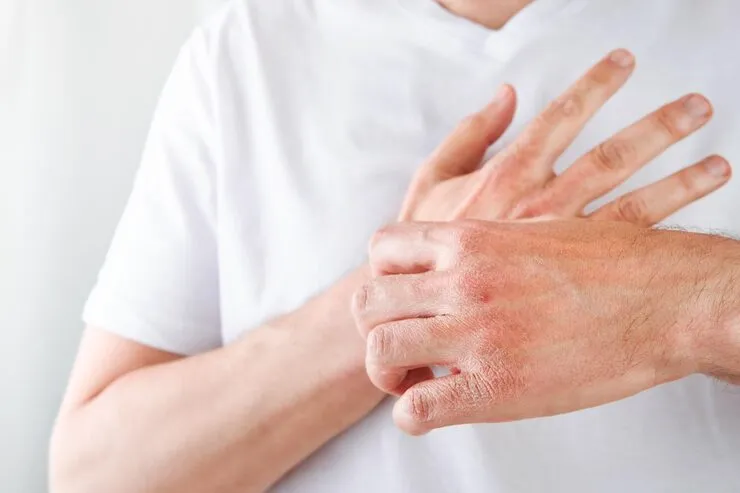

Dry, itchy hands can be easy to dismiss, especially if you wash them often or work with water, soaps or cleaning products. But when dryness keeps returning, or the skin becomes cracked, sore or blistered, it may be hand eczema, also called hand dermatitis.
Hand eczema can affect the palms, fingers or backs of the hands. Different causes can look similar, so a clinician may need to examine the skin and ask about your daily activities. This guide covers common hand eczema symptoms, possible triggers, skin-care steps and when to seek medical advice.
What is hand eczema?
Hand eczema is inflammation of the skin on the hands. It may be related to atopic dermatitis, irritation from repeated contact with substances, or an allergic reaction to something touching the skin. More than one factor can contribute.
It is not contagious. You cannot catch hand eczema from another person through touch or shared objects. However, persistent symptoms can make daily tasks such as washing, cooking, working or writing uncomfortable.
What does hand eczema look like?
Hand eczema symptoms vary. They may include:
- Dry, rough or chapped skin
- Itchy, red or darker irritated patches
- Scaling or peeling
- Burning or stinging
- Small, itchy blisters on the fingers or palms
- Painful cracks, sometimes with bleeding
- Thickened skin after repeated irritation or scratching
The appearance can depend on your skin tone and the cause. Some people mainly have dry, cracked skin, while others develop blisters or inflamed patches. Hand eczema can also be mistaken for fungal infections, psoriasis or other skin conditions. An online photo cannot confirm the diagnosis.
What causes hand eczema?
There is no single cause for every case. Hand eczema can start or worsen when the skin barrier is repeatedly irritated, or when the immune system reacts to a substance.
Irritant contact dermatitis
Frequent contact with water, handwashing, detergents, soaps, sanitizers, solvents or cleaning products can irritate the skin. Repeated wet work may dry out and weaken the skin’s protective barrier. Some people develop irritation gradually after repeated exposure.
Allergic contact dermatitis
Sometimes the skin reacts to a particular allergen. Fragrances, metals, rubber or latex, adhesives, hair products and certain workplace materials may be involved. The reaction can appear after contact, and it may take time to identify the trigger.
Atopic dermatitis
People with a personal or family history of eczema, asthma or hay fever may be more prone to atopic dermatitis. Hand eczema can occur alongside it.
Work and everyday activities
Jobs and tasks involving repeated handwashing, gloves, chemicals, food handling or wet work may increase exposure to irritants. This does not mean you must stop working. A healthcare professional can help assess possible triggers and discuss practical ways to reduce skin exposure.
Is it hand eczema or dry skin?
Simple dry skin often improves with regular moisturising and avoiding harsh products. Hand eczema may persist, flare repeatedly, itch or burn, and develop inflamed patches, blisters or painful cracks.
These clues are not enough to diagnose the cause. If the rash keeps returning despite gentle skin care, affects work or sleep, or is getting worse, arrange an assessment. A clinician may ask about your job, household products, gloves and when symptoms began. In some cases, additional testing may be considered.
What can help protect hands with eczema?
Everyday skin care can support the skin barrier, though it may not be enough on its own for persistent or severe hand eczema.
- Use a fragrance-free moisturiser regularly, especially after washing your hands.
- Choose gentle cleansers and use lukewarm water.
- Pat your hands dry rather than rubbing them.
- Consider protective gloves for tasks involving detergents or cleaning products. Choose gloves suited to the task and avoid wearing them longer than needed, since sweat and trapped moisture can also irritate skin.
- If gloves make your hands sweaty, ask a clinician about a suitable glove routine or cotton liners.
- Note products, activities or work conditions that seem to precede a flare.
- Avoid scratching or peeling skin, which can further damage it.
- Ask a healthcare professional before using medicated creams, especially on cracked skin or if you are unsure what caused the rash.
Do not stop a prescribed treatment or replace it with a home remedy without speaking with the clinician who recommended it.
What treatments may a clinician discuss?
Treatment depends on the cause and severity. A clinician may recommend moisturisers, steps to reduce contact with irritants, allergy assessment or prescription medication. If an infection is suspected, that needs separate assessment and treatment.
If the rash is persistent, painful or affecting your work, a dermatologist can help assess the cause and discuss appropriate options. The best plan depends on your skin, symptoms, health history and likely exposures.
Homeopathy is sometimes considered as a complementary approach. Evidence does not establish homeopathy as an effective treatment for hand eczema. It should not replace a diagnosis or delay recommended dermatology care. If you are considering it, discuss it with your healthcare professionals and keep them informed about products you use.
When should you seek medical advice?
Arrange an assessment if hand eczema is recurring, spreading, painful, interfering with sleep or daily activities, or not improving with basic skin care.
Seek prompt medical advice if the skin becomes increasingly painful, warm or swollen, develops pus or crusting, or your symptoms worsen quickly. These may indicate an infection or another condition requiring timely care.
Discuss your skin concerns at a clinic near you
Recurring dry, itchy or cracked hands can have several causes. Dr. Tathed’s Homeopathic Clinic can discuss your concerns and the importance of getting an appropriate skin assessment. Find clinic information for PCMC, Pune, Viman Nagar, Pune, or Naupada, Thane.
You can also read about eczema care at Dr. Tathed’s Homeopathic Clinic. Homeopathy is not a proven substitute for dermatology care, so do not stop prescribed treatment or delay an assessment.
Conclusion
Hand eczema can cause dry, itchy, inflamed, blistered or cracked skin. Repeated water exposure, soaps, detergents, allergens and atopic dermatitis may contribute, but similar symptoms can have other causes. Gentle hand care may help, while persistent or worsening symptoms deserve professional assessment.
Frequently asked questions
Is hand eczema contagious?
No. Hand eczema is not contagious and does not spread from one person to another through touch.
Can frequent handwashing cause hand eczema?
Repeated washing can irritate and dry the skin barrier in some people. Use a gentle cleanser, moisturise after washing and seek advice if symptoms keep returning.
Are small blisters on fingers always hand eczema?
No. Small, itchy blisters can occur with dyshidrotic eczema, but other conditions can also cause blisters. Get an assessment if they are painful, spreading or recurring.
Can hand eczema be permanently cured?
It depends on the cause. Symptoms can often be managed, and avoiding an identified irritant or allergen may help. Some forms can recur, so follow-up may be useful.
Which doctor should I see for hand eczema?
A dermatologist or other qualified healthcare professional can assess a persistent hand rash, consider possible causes and discuss treatment options.
Can I contact Dr. Tathed’s Homeopathic Clinic about hand eczema?
Yes. You can contact Dr. Tathed’s Homeopathic Clinic to discuss your concerns and clinic locations in PCMC, Pune; Viman Nagar, Pune; and Naupada, Thane. Seek appropriate medical assessment for diagnosis and do not delay prescribed care.
References
- American Academy of Dermatology: Hand eczema symptoms, causes and care
- NHS: Contact dermatitis symptoms
- NHS: Contact dermatitis overview
- NHS: Pompholyx, or dyshidrotic eczema
Medical note: This article is for general information and cannot diagnose a skin condition. Do not start, stop or replace prescribed treatment without consulting a qualified healthcare professional.