
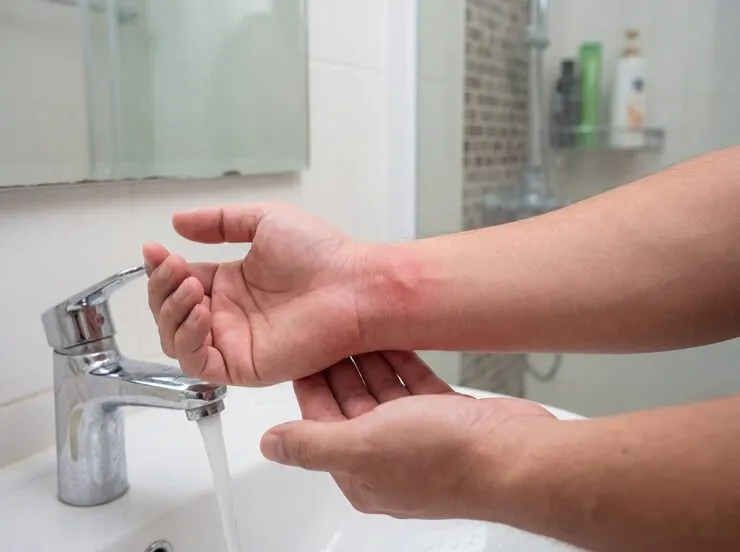

An itch starts along the side of a finger. By the next morning, you can see a cluster of tiny blisters just beneath the skin. A few days later, washing dishes stings, and the skin starts to peel. If this sounds familiar, dyshidrotic eczema, also called pompholyx or dyshidrosis, is one possible explanation.
What matters next is where the blisters appear, whether they keep coming back and whether the skin is becoming more painful, warm or swollen. A flare of eczema and a skin infection can both cause blisters, but they need different care.
What does dyshidrotic eczema look like?
Dyshidrotic eczema usually causes small, intensely itchy blisters on the sides of the fingers, palms, soles or toes. Some people feel a burning or prickling sensation before the blisters are visible. They may appear in clusters, and several small blisters can join to form a larger one.
The rash often changes as the flare progresses:
| What you notice | How it may feel or look |
|---|---|
| Itch before the rash | A patch of skin feels prickly, itchy or sore, sometimes before you can see any bumps. |
| A cluster of blisters | Tiny blisters filled with fluid appear along a finger, across the palm or on the sole. |
| Peeling as the blisters settle | The area may stay dry, scaly or tender. Cracks can sting when you wash your hands or walk. |
On brown or black skin, the blisters or surrounding skin may look darker, and redness can be less obvious. Some people notice dark marks after the blisters heal. Look at the location and pattern as well as the colour.
For a broader look at itchy rashes and how they differ across skin tones, read our guide to eczema symptoms and types.
Is it eczema, a fungal infection or a reaction to something you touched?
If the rash keeps appearing on the same finger or only on one foot, tell your doctor. Blisters or scaling on just one hand or foot can be a reason to check for a fungal infection. A dermatologist may take a small skin scraping if the pattern suggests one. Mention any peeling between your toes, even if the rash that brought you in is on your hands.
Think about what touches the affected area, too. A rash that repeatedly flares after using the same cleaning product, wearing certain gloves or handling a material at work may involve contact dermatitis. Irritants and contact allergies can contribute to hand eczema, and the conditions may overlap. A dermatologist may suggest patch testing if delayed contact allergy is suspected.
Dry, cracked hands can also occur without the typical blister pattern. If dryness and splitting are your main symptoms, our hand eczema guide explains how repeated exposure to water, soap and other irritants can affect the skin.
When to book an assessment and when to seek urgent care
Book a medical assessment if this is your first unexplained blistering rash, the blisters keep returning, or the itch and pain interfere with sleep, work or walking. A photo can help show what the rash looked like earlier in the flare. Show the clinician any products you have applied, especially if the rash changed after using them.
Seek medical care the same day if the affected skin becomes increasingly painful, hot or swollen, or if you notice pus, yellow-brown crusting or redness or discolouration spreading beyond the rash. These can be signs of infection. If you also feel faint or confused, breathe unusually fast, or have a very high fever or shaking chills, seek emergency care.
Dyshidrotic eczema causes and triggers
The exact cause of dyshidrotic eczema is unknown. Certain exposures can bring on a flare in some people. A pattern across several episodes is more informative than trying to identify a cause from the first outbreak.
When flares follow wet work
Notice whether your hands get worse after washing dishes, shampooing hair, cleaning equipment or wearing gloves for long periods. Repeated contact with water, soap and detergents can irritate the skin. If handwashing or protective gloves are required at work, keep following safety and hygiene rules. Ask a dermatologist or occupational health professional how to reduce skin irritation during those tasks.
When heat, sweat or contact with metal seems to play a role
Some people notice flares during hot weather or after their hands or feet stay sweaty. Others notice a reaction linked to contact with metals such as nickel or cobalt. If a flare follows wearing a new ring or handling a particular tool, make a note of it. A suspected metal sensitivity alone is insufficient reason to cut foods out of your diet. Discuss testing or dietary changes with your dermatologist.
A simple flare record can help. Write down the date, the exact location, what had been touching the skin, and which symptoms came first. Take one photo when the blisters appear and another when the skin starts to peel. If the rash is quieter on weekends or away from work, record that too.
Discuss recurring hand or foot eczema at a clinic near you
If you’ve already had your rash assessed and have questions about eczema care, Dr. Tathed’s Homeopathic Clinic can discuss your symptom history and questions about complementary care. Contact our Chinchwad clinic in PCMC, Pune, explore eczema consultations in Viman Nagar, or contact our homeopathy clinic in Naupada, Thane West.
What you can do during a flare
Leave the blisters intact. Popping or scratching them can break the skin and increase the risk of infection. If a blister opens on its own, keep the area clean and avoid pulling off the loose skin. If a large or painful blister is making it difficult to grip something or put on a shoe, ask a clinician how to protect it.
Keep washing gentle. Use lukewarm water and a mild cleanser without fragrance for ordinary washing. Pat the area dry. Apply a plain moisturising cream or ointment to dry areas after washing to help protect the skin barrier. A moisturiser helps with dryness and cracking. An active flare may need separate treatment for inflammation.
Protect your hands during cleaning. Use gloves suited to the task and change them if water gets inside. Cotton liners can help if sweat builds up under waterproof gloves. For foot flares, change damp socks and choose footwear that lets your feet stay cool where practical.
What dyshidrotic eczema treatment can involve
A dermatologist will usually ask about the timing of your flares, look at your hands and feet, and consider other causes. If there are signs of infection, that may change what needs attention first. If flares keep coming back despite treatment, your clinician may revisit your diagnosis, check for contact allergy or assess whether daily exposures are keeping the skin irritated.
Is there a best cream for dyshidrotic eczema?
The answer depends on whether you are dealing with dryness after a flare, active skin inflammation or a different condition that looks similar. A plain moisturiser helps protect the skin barrier. For an active eczema flare, your clinician may prescribe a topical corticosteroid to reduce inflammation and explain where and for how long to apply it. If a fungal or bacterial infection is found, it needs care suited to that diagnosis. Avoid choosing a leftover medicated cream based on how the blisters look.
If a prescribed treatment helps but symptoms return, tell your dermatologist how long the improvement lasted and what changed before the next flare. That information can help guide a follow-up. For persistent or severe symptoms, a dermatologist may consider other medicines or supervised light treatment.
If you are exploring homeopathic consultations for eczema, tell your treating clinician which products you are considering. Evidence has yet to establish homeopathy as an effective treatment for dyshidrotic eczema. Continue the care recommended by your dermatologist, and seek timely medical assessment if infection is suspected.
Frequently asked questions
How long do dyshidrotic eczema blisters last?
The blisters often settle over a few weeks. Peeling, dryness or cracks may follow. If new blisters keep appearing, the rash worsens or you develop signs of infection, arrange an assessment.
Is dyshidrotic eczema contagious?
Dyshidrotic eczema cannot spread from person to person. Other causes of a rash, including some fungal infections, can look similar, so an unexplained rash is worth getting checked.
Can dyshidrotic eczema affect only one finger or one foot?
A rash can be limited to one area. If it consistently affects only one hand or foot, tell your clinician. This is one clue they may use to decide whether to check for fungus or another cause.
Can dyshidrotic eczema come back after the skin heals?
Yes. Some people have a single episode, while others experience repeated flares. If the blisters return, photos and a short record of exposures can make it easier to discuss the pattern at your appointment.
Where can I visit Dr. Tathed’s Homeopathic Clinic to discuss eczema care?
Appointments are available in Chinchwad, PCMC, Pune, Viman Nagar, Pune, and Naupada, Thane West. If you already have a diagnosis, bring your dermatologist’s notes, photos of past flares and a list of products you use. Contact the clinic through the appointment form.
What to do if the blisters return
A photo of the early blisters and a note of where they started can give your clinician a better picture of the flare. Ask for an assessment if the rash is new, keeps coming back or makes everyday tasks difficult. Increasing pain, warmth, swelling or pus deserves medical attention the same day.
References -
- NHS | Pompholyx (dyshidrotic eczema)
- DermNet | Dyshidrotic eczema, clinical features and diagnosis
- American Academy of Dermatology | Dyshidrotic eczema signs and symptoms
- American Academy of Dermatology | Dyshidrotic eczema diagnosis and treatment
- NHS | Cellulitis and urgent warning signs
- American Academy of Dermatology | Dyshidrotic eczema overview and triggers
- American Academy of Dermatology | Self-care for dyshidrotic eczema
- NHS | Blister care
- National Center for Complementary and Integrative Health | Homeopathy evidence and safety
- Cleveland Clinic | Dyshidrotic eczema symptoms, diagnosis and treatment
- Ubersuggest | Dyshidrotic eczema keyword report for India
Medical note. This article is for general information. A qualified healthcare professional can assess your symptoms and advise you about treatment.