
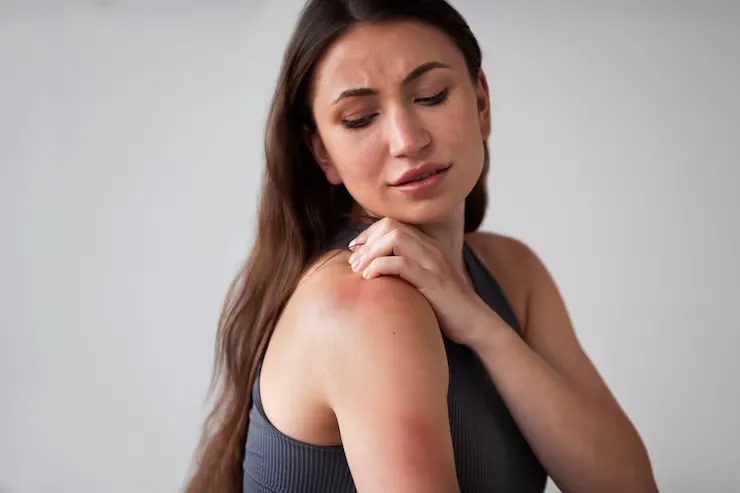

A painful, burning rash that suddenly appears on one side of the body can be worrying, especially when you are not sure what is causing it. If you are searching for the shingles meaning, shingles is the common name for herpes zoster, a viral condition caused by the reactivation of the varicella-zoster virus.
This is the same virus that causes chickenpox.
In Marathi, shingles is commonly called नागीण (Nagin), while in Hindi it may be referred to as नागिन or हरपीज ज़ोस्टर.
Understanding the early symptoms of shingles is important because treatment may be more effective when started soon after the rash appears. If you notice unexplained burning pain, tingling, skin sensitivity, or a blistering rash on one side of your body, it is advisable to seek medical evaluation.
What Is Shingles?
Shingles and herpes zoster refer to the same medical condition.
It usually develops when the varicella-zoster virus, which remains inactive in the nervous system after a previous chickenpox infection, becomes active again later in life.
The condition commonly causes a painful or burning rash with fluid-filled blisters. Unlike many common skin rashes, shingles usually affects a limited area on one side of the body or face.
The rash often develops along the path of a nerve, which explains why pain, tingling, or burning may begin even before the skin changes become visible.
Shingles Meaning in Different Languages
| Term | Meaning |
|---|---|
| Shingles | Common English name |
| Herpes Zoster | Medical name |
| Shingles meaning in Marathi | नागीण |
| Herpes Zoster in Marathi | नागीण / हर्पिस झोस्टर |
| Shingles meaning in Hindi | नागिन / हरपीज ज़ोस्टर |
In Marathi, herpes zoster is commonly referred to as नागीण.
Shingles should not be confused with ringworm, eczema, fungal infections, or common skin allergies. It has a different cause and may involve both the skin and the nerves.
Herpes Zoster Is Caused By Which Virus?
A common question people ask is, “Shingles is caused by which virus?”
Herpes zoster is caused by the varicella-zoster virus, or VZV.
The same virus first causes chickenpox. After a person recovers from chickenpox, the virus may remain inactive inside the nervous system for many years.
Later, the virus can become active again and cause shingles.
This does not mean that a person has caught a completely new virus. In most cases, shingles results from the reactivation of the virus already present in the body after an earlier chickenpox infection.
Who Is More Likely to Develop Shingles?
Anyone who has previously had chickenpox may develop shingles.
However, the likelihood generally increases with age because immunity against the virus can weaken over time.
People with reduced immune function may also have a higher risk. This can include individuals taking certain immune-suppressing medicines or undergoing some forms of medical treatment.
Factors that may be associated with a greater risk include:
-
Increasing age
-
A weakened immune system
-
Certain long-term illnesses
-
Some cancer treatments
-
Medicines that suppress immunity
-
Organ transplantation
-
Severe physical stress or illness
Stress alone should not automatically be considered the direct cause of shingles, but overall immune health can influence the body's ability to keep the virus inactive.
Shingles Stages: How Does Herpes Zoster Develop?
People often search for shingles stages because the condition changes noticeably during its course.
Although every patient may experience it differently, shingles commonly progresses through the following phases.
Stage 1: Tingling, Burning, or Pain
Before the rash appears, the skin may start feeling unusual.
Common early sensations include:
-
Burning
-
Tingling
-
Itching
-
Shooting pain
-
Increased sensitivity
-
Pain when clothing touches the skin
Some people may also experience tiredness, headache, mild fever, or a general feeling of being unwell.
This stage can be confusing because there may be significant discomfort even though no rash is visible yet.
Stage 2: Red Rash Appears
After the early nerve symptoms, a red or irritated patch of skin may develop.
The rash commonly appears on:
-
Chest
-
Back
-
Abdomen
-
Waist
-
Face
-
Neck
One of the characteristic features of shingles is that the rash often appears on only one side of the body.
Stage 3: Fluid-Filled Blisters Form
Small fluid-filled blisters may then appear in clusters.
These blisters can cause:
-
Burning
-
Itching
-
Tenderness
-
Sharp nerve pain
-
Sensitivity to touch
New blisters may continue developing for several days.
Understanding the clinical signs and symptoms of shingles can help distinguish it from other common skin conditions.
Stage 4: Blisters Dry and Form Crusts
The fluid-filled blisters gradually begin to dry.
They usually develop scabs or crusts as the skin starts healing. The affected area should be kept clean and should not be scratched, as broken skin can increase the risk of secondary infection.
Stage 5: Healing
For many people, the skin gradually heals over the following weeks.
However, pain may sometimes continue even after the rash disappears.
This persistent nerve pain is called postherpetic neuralgia, or PHN.
It is one of the most common complications associated with shingles, particularly among older adults.
Common Symptoms of Herpes Zoster
Shingles symptoms are not limited to the visible rash.
In many cases, nerve-related symptoms start before the blisters appear.
Common symptoms include:
-
Burning skin pain
-
Tingling or pins-and-needles sensation
-
Itching
-
Skin sensitivity
-
One-sided red rash
-
Fluid-filled blisters
-
Shooting or stabbing nerve pain
-
Headache
-
Tiredness
-
Mild fever or chills in some people
The severity can vary considerably. Some people experience mild irritation, while others may develop significant nerve pain.
Can Shingles Affect the Face and Eyes?
Yes.
Shingles can sometimes develop on the face, forehead, nose, or around the eye.
This requires prompt medical attention because involvement of certain facial nerves may affect the eye and, in some cases, vision.
Seek urgent medical evaluation if shingles is associated with:
-
Rash near the eye
-
Eye redness
-
Eye pain
-
Sensitivity to light
-
Blurred vision
-
Rash on the forehead or nose
-
Facial weakness
Similarly, shingles affecting the area around the ear may sometimes be associated with ear pain, hearing changes, dizziness, or facial weakness.
These symptoms should not be managed only with home remedies.
Is Shingles Contagious?
Shingles itself is not usually passed from one person to another in the same way as a cold or flu.
However, a person with active shingles can transmit the varicella-zoster virus to someone who has never had chickenpox or does not have immunity against it.
That person may then develop chickenpox, rather than shingles.
The virus can spread through contact with fluid from active shingles blisters.
Until the blisters have dried and crusted, it is sensible to take precautions such as:
-
Keeping the rash covered where possible
-
Avoiding scratching or touching the blisters
-
Washing hands regularly
-
Not sharing towels or personal items
-
Avoiding close contact with vulnerable people
Particular care should be taken around people with weakened immunity, newborn babies, and pregnant individuals who may not have immunity to chickenpox.
How Long Does Shingles Last?
The duration of shingles varies from person to person.
In many cases, the blisters begin to dry and crust within approximately 7 to 10 days, while the skin may take around 2 to 4 weeks to heal.
Pain does not always disappear when the rash heals. Some patients, especially older adults, may experience persistent nerve pain for longer.
How Is Shingles Treated?
Shingles should be evaluated by a qualified healthcare professional, particularly during the early stages.
Doctors may prescribe antiviral medicines to help reduce the severity and duration of the illness.
Common antiviral medicines used in shingles management include:
-
Acyclovir
-
Valacyclovir
-
Famciclovir
These medicines are generally more effective when started early after the rash appears.
Treatment may also include appropriate pain relief, depending on the severity of the symptoms and the patient's overall health.
Supportive measures may include:
-
Keeping the rash clean and dry
-
Wearing loose cotton clothing
-
Avoiding scratching
-
Using cool compresses for comfort
-
Getting adequate rest
-
Following medical advice regarding pain management
Do not start or stop medicines without consulting a qualified healthcare professional.
Can Homeopathy Be Used for Herpes Zoster?
Some patients explore homeopathy as part of supportive care for discomfort associated with herpes zoster.
However, shingles is caused by a viral reactivation and can sometimes lead to serious complications. Therefore, homeopathic treatment should not delay medical assessment or medically indicated antiviral treatment.
A qualified homeopathic doctor can assess symptoms individually and may provide supportive care alongside appropriate medical management.
If the rash affects the eyes, ears, face, or occurs in a person with reduced immunity, prompt conventional medical evaluation is especially important.
What Is Postherpetic Neuralgia?
Postherpetic neuralgia, or PHN, is nerve pain that continues after the shingles rash has healed.
The pain may feel like:
-
Burning
-
Shooting pain
-
Electric shock-like sensations
-
Tingling
-
Extreme sensitivity to touch
Even light clothing touching the skin may sometimes feel painful.
The risk of postherpetic neuralgia generally increases with age.
If pain continues after the rash disappears, medical evaluation is recommended so that the symptoms can be properly assessed and managed.
What Are the Possible Complications of Shingles?
Most people recover from shingles, but complications can occur.
Possible complications include:
-
Postherpetic neuralgia
-
Eye problems
-
Vision complications
-
Hearing problems
-
Secondary bacterial infection of the skin
-
Facial nerve problems
-
Widespread rash in people with weakened immunity
Learning about important shingles complications and warning signs can help patients recognise when medical attention should not be delayed.
When Should You See a Doctor?
It is advisable to seek medical advice if you suspect shingles, especially if the rash has recently appeared.
Seek prompt or urgent medical care if:
-
The rash is near the eye
-
You develop eye pain or vision changes
-
The rash appears on your face
-
You develop hearing changes
-
Facial weakness occurs
-
The pain is severe
-
The rash spreads widely
-
You have a weakened immune system
-
You are pregnant
-
The blisters appear infected
-
You are unsure whether the rash is shingles
Early diagnosis can help determine whether antiviral medicines or other treatment is required.
Can Shingles Be Prevented?
Vaccination can reduce the risk of developing shingles and some of its complications.
Eligibility depends on factors such as age, immune status, medical history, and local vaccination recommendations.
People considering vaccination should discuss their individual situation with a qualified healthcare professional.
You can also read more about shingles vaccination and prevention.
A shingles vaccine is intended for prevention and is not used to treat an active shingles outbreak.
Common Myths About Shingles or नागीण
Because shingles is commonly called नागीण in Marathi and नागिन in Hindi, several traditional beliefs are associated with the condition.
Myth: Shingles becomes dangerous only if the rash meets around the body
There is no medical basis for judging shingles severity by whether the rash “joins” or circles around the body.
The seriousness of shingles depends on factors such as:
-
Which nerves are affected
-
Whether the eye or ear is involved
-
The extent of the rash
-
The patient's age
-
Immune status
-
Development of complications
Myth: Shingles is caused by a new infection every time
In most cases, shingles occurs because the varicella-zoster virus from an earlier chickenpox infection becomes active again.
Myth: Every painful rash is shingles
Not every painful or itchy rash is herpes zoster.
Skin allergies, eczema, fungal infections, contact dermatitis, insect bites, and other conditions can sometimes appear similar.
A proper medical diagnosis is important before starting treatment.
Conclusion
Shingles, herpes zoster, नागीण, and नागिन all refer to the same viral condition caused by reactivation of the varicella-zoster virus.
The condition commonly begins with burning, tingling, pain, or skin sensitivity before developing into a one-sided blistering rash.
Recognising these early signs is important because timely medical assessment can help confirm the diagnosis and determine whether antiviral treatment is required.
Do not rely only on home remedies if you suspect shingles. This is especially important if the rash develops near the eyes, ears, or face, if the pain is severe, or if you have a weakened immune system.
Consult Dr. Tathed's Homeopathy Clinic
If you are experiencing a painful or unexplained skin rash and would like an individual assessment, you can consult Dr. Tathed's Homeopathy Clinic for professional guidance and supportive homeopathic care.
A proper diagnosis should always come first, particularly when herpes zoster is suspected.
Seek early medical evaluation, avoid self-medication, and get the rash properly assessed before starting treatment.
- Chinchwad (Pimpri-Chinchwad): 9405435981
- Viman Nagar (Pune): 8180008068
- Thane West: 7498996920
- Online Appointment: Book an Appointment
Visit Our Homeopathy Clinic for Shingles
- Homeopathy Clinic in Chinchwad, Pune : Opposite lokmanya hospital, near railway bridge, Renuka Sai Society, Ganesh Nagar, Chinchwad, Pimpri-Chinchwad, Maharashtra 411033
- Homeopathy Clinic in Viman Nagar, Pune : Datta Mandir Chowk, Unit 106, 1st Floor, Lunkad Skymax Mall, Konark Nagar, Clover Park, Viman Nagar, Pune, Maharashtra 411014
- Homeopathy Clinic in Thane West : Office No. 207, JVM’s Corner Stone, Hariniwas Circle, Lal Bahadur Shastri Marg, Naupada, Thane West, Thane, Maharashtra 400602
Frequently Asked Questions
What is the simple meaning of shingles?
Shingles is a viral condition that causes a painful, blistering rash, usually on one side of the body. It is caused by reactivation of the varicella-zoster virus.
What is shingles meaning in Marathi?
Shingles is commonly called नागीण (Nagin) in Marathi.
What is herpes zoster meaning in Marathi?
Herpes zoster is commonly known as नागीण or हर्पिस झोस्टर in Marathi.
What is shingles meaning in Hindi?
Shingles is commonly called नागिन or हरपीज ज़ोस्टर in Hindi.
Herpes zoster is caused by which virus?
Herpes zoster is caused by the varicella-zoster virus (VZV), which is the same virus that causes chickenpox.
What are the main stages of shingles?
The usual progression includes early burning or tingling, development of a red rash, formation of fluid-filled blisters, crusting of the blisters, and gradual healing.
Can shingles spread from one person to another?
A person usually does not catch shingles directly from someone else. However, active shingles can transmit varicella-zoster virus to a person without immunity, who may then develop chickenpox.
How long does shingles usually last?
In many cases, the rash heals within approximately 2 to 4 weeks. However, nerve pain may persist longer in some people.
Can shingles happen more than once?
Yes. Although many people experience shingles only once, it is possible to develop the condition more than once.
Is shingles dangerous?
Most people recover, but shingles can cause complications, particularly if it affects the eye, ear, face, or occurs in someone with weakened immunity.
Should I see a doctor for shingles?
Yes. Early medical evaluation is advisable, especially when the rash has appeared recently. Prompt treatment may help reduce symptom severity and the risk of complications. You can consult Dr. Tathed's Homeopathy Clinic for an individual assessment and supportive homeopathic care. If shingles affects the eyes, ears, or face, or if symptoms are severe, seek prompt conventional medical evaluation as well.
References :