
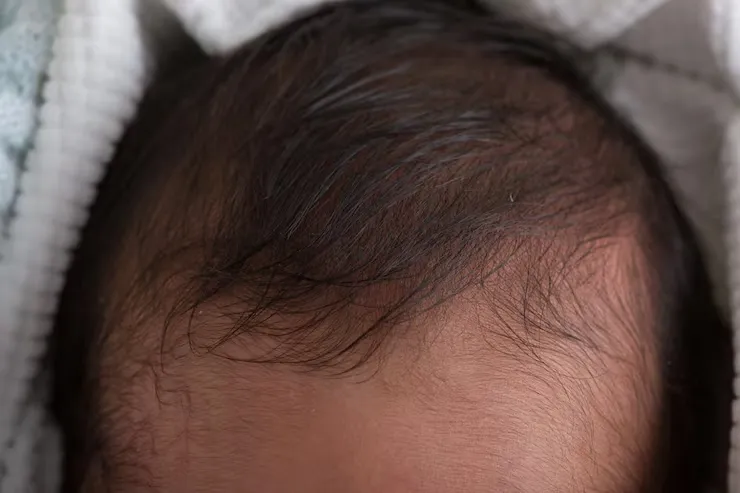

Did your hair suddenly start falling excessively a few months after dengue, typhoid, COVID, another high fever, surgery, childbirth, severe stress or rapid weight loss?
One possible explanation is telogen effluvium.
Unlike alopecia areata, which commonly produces distinct bald patches, telogen effluvium usually causes diffuse shedding across the scalp. You may notice much more hair than usual while washing, combing or running your fingers through your hair.
The confusing part is that the shedding often does not start immediately after the triggering event. There may be a delay of several weeks or months, which is why many people do not connect their recent illness or stress with their current hair fall.
Fortunately, acute telogen effluvium is generally a temporary, non-scarring form of hair loss when the underlying trigger is identified and resolved.
Telogen Effluvium Meaning
To understand telogen effluvium meaning, it helps to know that hair naturally moves through different phases.
The anagen phase is the active growing phase.
The catagen phase is a short transition period.
The telogen phase is the resting phase.
Normally, only a proportion of scalp hairs are resting and shedding at any given time.
In telogen effluvium, a physical or emotional stressor causes an unusually large number of growing hairs to enter the resting phase earlier than expected.
Those hairs eventually shed, often several weeks or months after the original trigger.
Telogen Effluvium Meaning in Hindi
टेलोजन एफ्लुवियम ऐसी स्थिति है जिसमें बीमारी, तेज बुखार, तनाव, डिलीवरी, वजन कम होने या शरीर पर किसी बड़े दबाव के कुछ समय बाद अचानक सामान्य से अधिक बाल झड़ने लगते हैं।
telogen effluvium kya hota hai?
यह एक प्रकार का temporary hair shedding है जिसमें बहुत सारे बाल एक साथ resting phase में चले जाते हैं और बाद में झड़ने लगते हैं।
Why Does Telogen Effluvium Happen?
The hair follicle is sensitive to major changes in the body.
When the body experiences significant physiological stress, it may temporarily alter normal hair cycling.
Common triggers include:
High Fever or Infection
Dengue, viral fever and other significant infections can trigger excessive shedding.
The hair fall may begin only after you have otherwise recovered from the illness.
Severe Emotional Stress
Major emotional distress can affect several body systems, including the hair-growth cycle.
Not everyone under stress develops telogen effluvium, but severe or prolonged stress may contribute in susceptible individuals.
Surgery or Hospitalisation
Major surgery, anaesthesia, blood loss or significant illness can place considerable physiological stress on the body.
Childbirth
Hormonal changes after delivery can cause many hairs to enter the resting phase around the same time.
This is one reason postpartum hair shedding is common.
Rapid Weight Loss or Crash Dieting
Severe calorie restriction, inadequate protein intake and nutritional deficiencies can disturb the normal hair cycle.
Nutritional Deficiency
Iron deficiency and inadequate overall nutrition may contribute to persistent shedding in some patients.
Thyroid Problems
Both hair and skin can be affected by thyroid disorders.
A doctor may consider thyroid testing when hair loss occurs along with symptoms such as unexplained weight change, fatigue, menstrual changes or temperature intolerance.
Certain Medicines
Some medicines can affect the normal hair-growth cycle.
Do not discontinue prescribed medication without discussing it with the prescribing doctor.
What Does Telogen Effluvium Hair Loss Look Like?
Telogen effluvium usually causes diffuse hair shedding rather than isolated bald patches.
You may notice:
-
More hair while shampooing
-
Hair accumulating in the drain
-
Increased hair on your pillow
-
Large numbers of hairs in your comb
-
A thinner ponytail
-
Increased visibility of the scalp
-
General reduction in hair volume
The scalp itself usually looks normal.
If you have clearly defined circular bald patches, significant redness, scaling, scarring or pain, another diagnosis should be considered.
Why Does Hair Fall Start Months After Fever or Stress?
This delayed reaction is one of the most confusing features of telogen effluvium.
The trigger occurs first.
Hair follicles then enter the resting phase prematurely.
The hairs remain in this phase for some time before shedding becomes noticeable.
Therefore, someone who had dengue or another severe illness months ago may feel completely recovered before the hair fall suddenly begins.
When evaluating sudden shedding, it is useful to think back over the previous several months rather than only the previous week.
Is There a Telogen Effluvium Cure?
People frequently search online for a telogen effluvium cure, but it is better to think in terms of identifying and correcting the trigger, There is no single medicine that represents a universal cure for every person.
If the trigger was a temporary fever and you have recovered, the hair cycle may gradually normalize.
If iron deficiency is contributing, the deficiency needs appropriate management.
If repeated crash diets are responsible, nutrition needs correction.
If an ongoing thyroid problem is present, that condition needs medical care.
This cause-based approach is more useful than relying on one generic hair-fall product.
Telogen Effluvium Treatment
The appropriate telogen effluvium treatment depends on what triggered the shedding.
Identify the Trigger
A detailed history is often extremely helpful.
Think about significant events during the previous two to six months, including:
-
Fever
-
Infection
-
Hospital admission
-
Surgery
-
Delivery
-
Severe stress
-
Rapid weight loss
-
Dietary restriction
-
New medicines
Check for Persistent Medical Causes
When shedding is severe or prolonged, your doctor may consider investigations for conditions such as iron deficiency or thyroid disease based on your symptoms and medical history.
Improve Nutrition
Ensure your diet provides adequate energy and protein.
Extreme dieting should be avoided during recovery.
Manage Ongoing Stress
Stress management will not instantly stop shedding, but adequate sleep, regular activity and appropriate emotional support may improve general wellbeing.
Treat Scalp Problems
Dandruff does not cause every case of telogen effluvium, but significant scalp inflammation should be treated appropriately.
What About Homeopathic Treatment for Telogen Effluvium?
Homeopathic practitioners generally individualize treatment based on the person's overall symptom profile rather than prescribing one medicine for everyone with hair fall.
However, current high-quality evidence has not established homeopathy as a proven specific treatment for telogen effluvium.
If you choose homeopathic care, it should not replace investigation of underlying causes such as iron deficiency, thyroid disease, severe nutritional restriction or another medical problem.
Claims promising an immediate telogen effluvium cure should be viewed cautiously because the hair-growth cycle itself takes time to recover.
Telogen Effluvium Remedies
Useful telogen effluvium remedies focus mainly on supporting normal recovery rather than attempting to force hair to grow overnight.
Eat Adequate Protein
Include dal, beans, paneer, eggs, curd, soy, fish, chicken, nuts or other suitable protein sources.
Avoid Crash Diets
Rapid weight loss can itself trigger excessive shedding.
Handle Hair Gently
Avoid tight hairstyles, harsh chemical treatments and excessive heat while shedding is active.
Sleep Adequately
Regular sleep supports overall health and recovery after illness or stress.
Avoid Random Supplements
Taking multiple hair supplements without knowing whether you are deficient is not always helpful.
Iron, vitamin D, B12 or other supplements should be used appropriately when indicated.
Telogen Effluvium Recovery Timeline
One of the most common questions is: How long does telogen effluvium last?
A typical acute episode may follow a rough pattern.
Trigger: Month 0
Fever, illness, surgery, childbirth, severe stress or another event occurs.
Around 2 to 3 Months Later
Excessive shedding becomes noticeable.
The exact timing varies.
Following 3 to 6 Months
Shedding may gradually reduce once the trigger has resolved.
Acute telogen effluvium generally improves as the hair cycle normalizes.
Following Months
New hair continues growing, but restoring visible volume takes longer than stopping shedding.
Cosmetically significant recovery may take 12 to 18 months in some people because scalp hair grows slowly.
Telogen Effluvium Recovery Signs
People understandably want to know whether they are improving.
Possible telogen effluvium recovery signs include:
Less shedding: Fewer hairs appear in the shower, comb or pillow.
Short new hairs: Fine new growth becomes visible, particularly around the hairline.
Improving ponytail volume: Hair may gradually feel fuller over time.
Stable scalp visibility: The scalp stops appearing progressively thinner.
Recovery is gradual, so assess progress over months rather than days.
Acute vs Chronic Telogen Effluvium
When excessive shedding lasts for a relatively short period after an identifiable trigger, it is generally considered acute.
Persistent shedding for more than about six months may be described as chronic telogen effluvium and deserves further evaluation.
Chronic shedding can have several possible causes, so diagnosis should not be based on internet photographs alone.
When Should You Consult a Doctor?
Seek medical evaluation if:
-
Hair shedding continues beyond six months
-
Hair loss is rapidly worsening
-
You develop bald patches
-
Eyebrows or eyelashes are affected
-
The scalp is painful, red or scarred
-
You have extreme fatigue
-
Menstrual cycles have changed
-
You have major unexplained weight changes
-
Hair loss follows restrictive dieting
-
You are concerned about iron or thyroid problems
Telogen Effluvium Consultation in Pune, PCMC and Thane
Patients experiencing sudden hair shedding after stress, fever or illness can seek evaluation at Dr. Tathed's Homeopathy Clinic in Viman Nagar, Pune, Chinchwad, PCMC, and Naupada, Thane West.
The focus of any responsible consultation should be identifying potential triggers and determining whether another medical cause requires investigation.
Visit Our Homeopathy Clinic for Telogen Effluvium Consultation
- Homeopathy Clinic in Chinchwad, Pune : Opposite lokmanya hospital, near railway bridge, Renuka Sai Society, Ganesh Nagar, Chinchwad, Pimpri-Chinchwad, Maharashtra 411033
- Homeopathy Clinic in Viman Nagar, Pune : Datta Mandir Chowk, Unit 106, 1st Floor, Lunkad Skymax Mall, Konark Nagar, Clover Park, Viman Nagar, Pune, Maharashtra 411014
- Homeopathy Clinic in Thane West : Office No. 207, JVM’s Corner Stone, Hariniwas Circle, Lal Bahadur Shastri Marg, Naupada, Thane West, Thane, Maharashtra 400602
Final Thoughts
Telogen effluvium can look alarming because large quantities of hair may seem to fall out suddenly.
In reality, the process often started several months earlier when illness, fever, stress, childbirth, weight loss or another event disrupted the normal hair-growth cycle.
The reassuring point is that acute telogen effluvium is usually non-scarring and potentially reversible.
Instead of searching for an instant telogen effluvium cure, focus on finding and addressing the trigger, supporting adequate nutrition and allowing the hair cycle time to normalize.
If shedding persists, worsens or occurs with other symptoms, seek professional medical evaluation.
Frequently Asked Questions
Is telogen effluvium permanent?
Acute telogen effluvium is generally temporary and non-scarring. Hair often regrows after the trigger resolves.
Telogen effluvium kya hota hai?
Telogen effluvium एक temporary hair-shedding condition है जिसमें stress, fever, illness, delivery या अन्य trigger के बाद बहुत सारे बाल resting phase में चले जाते हैं और कुछ समय बाद झड़ने लगते हैं।
Can dengue cause telogen effluvium?
A significant febrile illness such as dengue can act as a physiological stressor and may be followed by temporary diffuse shedding.
Does telogen effluvium cause bald patches?
It usually causes diffuse shedding across the scalp rather than distinct smooth bald patches.
How long does telogen effluvium recovery take?
Shedding often settles over several months once the trigger resolves, while restoration of visible hair density can take considerably longer.
What are early telogen effluvium recovery signs?
Reduced shedding and gradual appearance of short new hairs are common positive signs.
Can telogen effluvium come back?
Yes. Another episode may occur if the body experiences a new significant trigger.
References
- Telogen Effluvium: Causes, Hair Cycle and Diagnosis
- Telogen Effluvium Recovery and Hair Regrowth Timeline
- Thyroid Disease: Symptoms and Hair-Related Changes
- Iron: Dietary Sources, Deficiency and Nutrition Guidance
- Homeopathy: Evidence, Effectiveness and Safety
Medical Disclaimer: This article is for general education only and is not a substitute for individual medical diagnosis or treatment.