
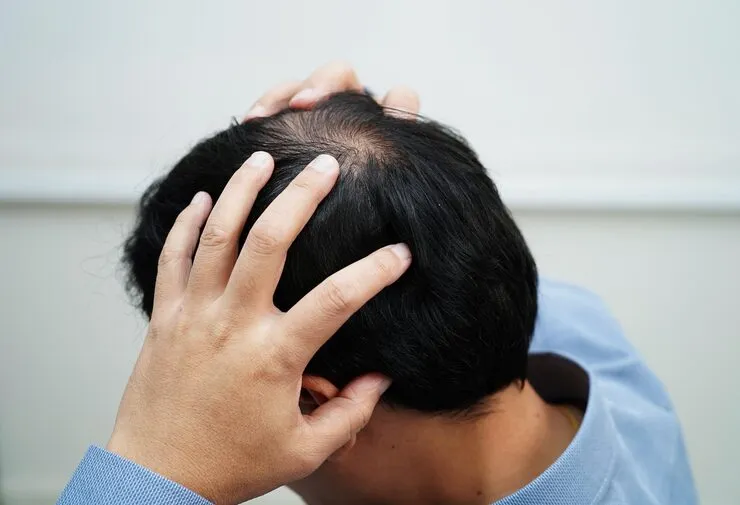

Noticing a round or oval bald patch on your scalp can be stressful, especially when it appears suddenly. One possible reason behind this type of hair loss is alopecia areata, a condition in which the body's immune system mistakenly targets the hair follicles.
Alopecia areata can affect people of different ages. For some, it begins with a single small patch. Others may notice several alopecia patches developing over time. Hair loss can affect the scalp, beard, eyebrows, eyelashes or other parts of the body.
The condition is not contagious, and the hair follicles are usually not permanently destroyed. This means hair regrowth is possible, although the pattern of hair loss and regrowth can be unpredictable.
If you are experiencing sudden patchy hair loss, understanding the underlying cause is more useful than trying random oils, serums, supplements or medicines without a proper assessment.
What Is Alopecia?
Alopecia is a general medical term used to describe hair loss.
It is not one specific disease. There are several forms of alopecia, and each may have different causes, patterns and treatment approaches.
Hair loss may occur because of autoimmune activity, genetics, hormonal changes, nutritional deficiencies, certain illnesses, medicines, physical stress or emotional stress.
Some common types include alopecia areata, male and female pattern hair loss, telogen effluvium, traction alopecia, alopecia totalis and alopecia universalis.
Understanding which type of alopecia you have is important because treatment that may be appropriate for one type of hair loss may not be suitable for another.
Alopecia Meaning in Hindi
Alopecia का सरल अर्थ है बालों का असामान्य रूप से झड़ना या सिर अथवा शरीर के किसी हिस्से से बालों का कम हो जाना।
Alopecia areata में आमतौर पर बाल एक समान पतले होने के बजाय गोल या अंडाकार पैच में अचानक झड़ सकते हैं।
In simple terms, alopecia means hair loss, while alopecia areata refers to a particular form of hair loss that commonly appears in patches.
What Is Alopecia Areata?
Alopecia areata is an autoimmune condition.
Your immune system normally protects your body against harmful organisms and infections. In alopecia areata, immune activity mistakenly targets structures around the hair follicles. This affects the normal hair-growth cycle and can lead to sudden hair loss.
The condition commonly affects the scalp, but it can also appear in the beard, eyebrows, eyelashes and other body areas.
Alopecia areata is different from ordinary age-related baldness. Male and female pattern hair loss generally develops gradually. Alopecia areata, on the other hand, may become noticeable quite suddenly when a person discovers a distinct smooth patch with little or no hair.
What Are the Main Alopecia Areata Causes?
Many patients want to identify one specific alopecia areata cause, but in reality, the condition can involve several interacting factors.
Autoimmune Activity
The primary process involved in alopecia areata is an abnormal immune response against the hair follicles.
This immune activity interrupts normal hair growth. Importantly, the follicles often remain present beneath the skin, which is one reason regrowth may occur.
Genetic Susceptibility
Genetics may influence a person's susceptibility to alopecia areata.
Having a family member with alopecia areata or another autoimmune condition does not mean that you will definitely develop hair loss. However, family history can be relevant when a doctor evaluates your condition.
Other Autoimmune Conditions
Some people with alopecia areata may also have other autoimmune disorders.
For this reason, your doctor may ask about personal and family medical history. Additional investigations may sometimes be recommended depending on your symptoms.
Stress
Patients often associate an episode of hair loss with emotional or physical stress.
Stress may influence hair health, but it should not automatically be assumed to be the only cause of patchy hair loss.
Another condition called telogen effluvium can also develop after severe stress, illness, fever, surgery or major physical changes. Telogen effluvium generally causes more widespread shedding rather than clearly defined round bald patches.
Health and Lifestyle Factors
Thyroid disorders, nutritional deficiencies, major illness, hormonal changes and certain medicines may cause other forms of hair loss.
Because several conditions can look similar in their early stages, proper assessment is important before deciding that hair loss is definitely alopecia areata.
What Are the Common Alopecia Reasons?
The phrase alopecia reasons covers many possible causes because alopecia simply means hair loss.
Someone experiencing excessive hair fall may have autoimmune alopecia areata, hereditary pattern hair loss, thyroid-related hair loss, iron deficiency, nutritional deficiencies, stress-related shedding, postpartum hair loss, medication-related hair loss or damage caused by repeated pulling from tight hairstyles.
The pattern of hair loss often provides useful clues.
Diffuse shedding across the scalp is different from a smooth circular patch. A receding hairline is different from sudden beard patches. Hair breaking midway along the strand is also different from hair falling from the root.
This is why understanding the pattern is an important part of diagnosis.
What Are the Symptoms of Alopecia Areata?
The most noticeable symptom of alopecia areata is usually sudden patchy hair loss.
A person may initially notice one smooth circular area without hair. Sometimes a family member, hairstylist or barber notices the patch before the patient does.
As the condition progresses, additional patches may appear.
The skin within an alopecia patch usually appears relatively normal rather than severely inflamed or scarred. Some people may experience mild itching, tingling or unusual sensations before or around an area of hair loss, while others experience no discomfort.
Hair loss may also affect the beard, eyebrows or eyelashes. Nail changes can occur in some individuals as well.
What Do Alopecia Patches Look Like?
Typical alopecia patches are often round or oval, clearly defined and smooth.
A person may develop one patch or several patches. Smaller areas may sometimes enlarge or connect with neighbouring areas.
However, not every bald patch is alopecia areata.
Fungal infections, repeated hair pulling, traction from hairstyles and certain inflammatory scalp conditions can also produce areas of hair loss.
If the bald area is painful, red, severely itchy, scaly, crusted or scarred, seek a professional medical evaluation instead of assuming it is alopecia areata.
Are There Different Stages of Alopecia Areata?
Alopecia areata does not always progress through a fixed Stage 1, Stage 2 and Stage 3 sequence.
It is more accurate to understand the condition according to the pattern and extent of hair loss.
Limited Patchy Alopecia Areata
This is when one or a small number of alopecia patches develop on the scalp, beard or another area.
Some people remain in this pattern and experience hair regrowth without developing extensive hair loss.
Multiple or Expanding Alopecia Patches
Additional patches may appear or existing patches may become larger.
In some cases, neighbouring areas can join together and create a larger region of hair loss.
Ophiasis Pattern
Some patients develop a band-like pattern of hair loss, particularly around the sides and back of the scalp.
Alopecia Totalis
When the condition leads to loss of most or all scalp hair, it is called alopecia totalis.
Alopecia Universalis
Alopecia universalis is a more extensive form in which hair loss may affect the scalp, eyebrows, eyelashes and body hair.
Having one small alopecia patch does not mean that the condition will inevitably progress to alopecia totalis or alopecia universalis.
The course is different for every patient.
Can Hair Grow Back After Alopecia Areata?
Yes, hair regrowth is possible.
In alopecia areata, the hair follicle is generally not permanently destroyed. Some patients may experience spontaneous regrowth, especially when the affected area is limited.
New hair can initially appear fine, soft or lighter in colour. It may gradually become closer to the person's normal hair texture and colour.
However, alopecia areata is unpredictable.
Hair may grow back and remain stable, or another episode may occur later. This is why patients should be cautious about advertisements or treatments that promise guaranteed or permanent hair regrowth.
No treatment outcome can be predicted with complete certainty for every individual.
How Is Alopecia Areata Diagnosed?
Diagnosis usually begins with a detailed examination of the scalp, hair, nails and pattern of hair loss.
The consultation may include questions about when the hair loss started, whether it appeared suddenly, family history, stress, recent illnesses, medications, diet, hormonal changes and other symptoms.
Depending on the patient's history and clinical findings, additional investigations may sometimes be advised to rule out thyroid disorders, nutritional deficiencies or other medical causes of hair loss.
Correct diagnosis is especially important before beginning long-term treatment.
Homeopathic Treatment for Alopecia Areata
Many patients searching for homeopathic treatment for alopecia areata are looking for an individualized approach rather than using the same medicine for every case of hair loss.
In homeopathic practice, treatment selection may consider the person's pattern of hair loss along with their broader medical history, associated symptoms, lifestyle, sleep, stress and general health.
A consultation may therefore look at when the alopecia patches first appeared, how quickly they are spreading, previous episodes, family history, other health conditions and possible triggering events.
Homeopathic medicines should not be selected simply by matching the name of a condition with a medicine found online.
Individualized assessment is particularly important because similar-looking hair loss may have very different underlying causes.
Published research from Indian government-supported homoeopathy institutions includes case reports and clinical investigations involving individualized homoeopathic management of alopecia areata. However, evidence remains limited, and individual case reports should not be interpreted as proof that the same result will occur in every patient.
Homeopathy should not replace appropriate dermatological assessment when alopecia is rapidly progressing, extensive or associated with other concerning symptoms.
Why an Individual Approach Matters
Two people can both have alopecia areata but have very different clinical histories.
One person may develop a single patch following a period of illness, while another may experience recurrent patches together with other autoimmune or health concerns.
The duration of hair loss, age of the patient, location of patches, rate of progression, previous episodes and overall health can all influence management decisions.
This is why responsible treatment begins with diagnosis and evaluation rather than promises of an instant cure.
When Should You Consult a Doctor?
Seek professional evaluation if you suddenly notice one or more bald patches, the patches are spreading rapidly, your eyebrows or eyelashes are also affected, most of your scalp hair is being lost, or you notice significant nail or skin changes.
Children with unexplained patchy hair loss should also be properly assessed.
You should seek medical advice sooner if the scalp is inflamed, painful, scarred or severely itchy, because another condition may be responsible for the hair loss.
Hair loss can also affect confidence and emotional wellbeing. If alopecia is causing significant stress or affecting everyday life, discussing these concerns with a healthcare professional is appropriate.
Alopecia Areata Treatment in Pune, PCMC and Thane
People experiencing unexplained hair loss or alopecia patches in Pune, Pimpri-Chinchwad or Thane can consider a detailed consultation to understand the pattern and possible reasons behind their hair loss.
At Dr. Tathed's Homeopathy Clinic, patients can seek consultation for hair fall and alopecia at Viman Nagar, Pune, Chinchwad in Pimpri-Chinchwad, and Naupada, Thane West.
The consultation focuses on the individual's symptoms, hair-loss pattern, health history and associated factors before deciding on an appropriate management approach.
Where additional medical evaluation or diagnostic investigations are required, they should form part of the patient's overall care.
Find Your Nearest Homeopathy Clinic
- Homeopathy Clinic in Chinchwad, Pune : Opposite lokmanya hospital, near railway bridge, Renuka Sai Society, Ganesh Nagar, Chinchwad, Pimpri-Chinchwad, Maharashtra 411033
- Homeopathy Clinic in Viman Nagar, Pune : Datta Mandir Chowk, Unit 106, 1st Floor, Lunkad Skymax Mall, Konark Nagar, Clover Park, Viman Nagar, Pune, Maharashtra 411014
- Homeopathy Clinic in Thane West : Office No. 207, JVM’s Corner Stone, Hariniwas Circle, Lal Bahadur Shastri Marg, Naupada, Thane West, Thane, Maharashtra 400602
Final Thoughts
Alopecia areata can be worrying, particularly when hair loss appears suddenly without an obvious explanation.
The key is not simply to stop hair fall but to understand why it is happening.
Alopecia areata is an autoimmune condition, but several other health issues can produce similar hair-loss patterns. Correct diagnosis helps differentiate alopecia areata from nutritional deficiencies, thyroid disorders, infections, stress-related shedding and hereditary hair loss.
If you notice persistent, recurrent or expanding alopecia patches, consider a professional assessment rather than self-medicating.
An individualized treatment plan, realistic expectations and regular monitoring can help you make informed decisions about your hair and overall health.
Frequently Asked Questions About Alopecia Areata
What is alopecia?
Alopecia is the medical term for hair loss. It includes several different conditions, including alopecia areata, pattern hair loss and other forms of temporary or permanent hair loss.
What is alopecia meaning in Hindi?
Alopecia का अर्थ है बालों का असामान्य रूप से झड़ना या बाल कम होना। Alopecia areata में बाल अक्सर गोल या अंडाकार पैच में झड़ते हैं।
What is the main cause of alopecia areata?
Alopecia areata is mainly associated with an autoimmune response in which the immune system mistakenly targets hair follicles. Genetic and environmental factors may also influence susceptibility.
Are alopecia patches permanent?
Not necessarily. Hair can regrow in many cases because the follicles usually remain present. However, the timing and extent of regrowth vary between individuals.
Can alopecia areata spread?
It can spread in some people, while others experience only one or a few small patches. A single patch does not necessarily mean that extensive hair loss will develop.
Is stress an alopecia reason?
Stress can influence hair health and may be associated with episodes of hair loss, but it should not be assumed to be the only cause. Several medical conditions can cause hair shedding or patchy hair loss.
Can homeopathy help with alopecia areata?
Homeopathic care is generally individualized according to the person's symptoms and overall health. Some government-supported Indian research has reported outcomes from individualized homeopathic treatment, but the available evidence is limited and results cannot be guaranteed. Patients with rapidly progressing or extensive alopecia should also receive appropriate medical evaluation.
How long does alopecia areata take to recover?
There is no single recovery timeline. Some people experience regrowth within months, while others may have recurring or persistent hair loss. The course varies considerably between patients.
Medical Disclaimer: This article is intended for general educational purposes only. It does not replace diagnosis, investigation or treatment by a qualified healthcare professional.
References
- https://www.niams.nih.gov/health-topics/alopecia-areata
- https://www.niams.nih.gov/health-topics/alopecia-areata/diagnosis-treatment-and-steps-to-take
- https://medlineplus.gov/ency/article/001450.htm
- https://medlineplus.gov/hairloss.html
- https://ccrhindia.ayush.gov.in/Publications/PublishedResearchPapers?language_content_entity=en
- https://ccrhindia.ayush.gov.in/our-network/national-homoeopathy-research-institute/national-homoeopathy-research-institute-in-mental-health
- https://www.nccih.nih.gov/health/homeopathy