
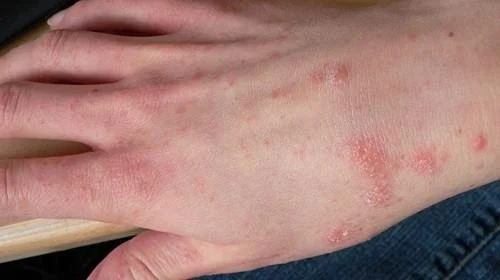

An itchy rash can begin suddenly or keep coming back for weeks or months. Sometimes the reason is easy to identify, such as a new cosmetic, jewellery, detergent or medicine. In other cases, there may be no obvious trigger.
This is why people searching for homeopathy medicine for skin allergy should first understand what may be causing their symptoms. Redness and itching do not always mean an allergy. Eczema, contact dermatitis, hives, dry skin, psoriasis, fungal infections and other skin conditions can produce similar symptoms.
The appearance of the rash, where it occurs, how long it lasts, what makes it worse and whether other symptoms are present can all help determine the likely cause.
If a skin problem repeatedly returns, identifying the underlying condition is usually more useful than repeatedly trying a new cream or medicine whenever the itching starts.
What Is a Skin Allergy?
A skin allergy occurs when the immune system reacts to a substance that it considers harmful. The resulting inflammatory response can cause noticeable changes in the skin.
Depending on the type and severity of the reaction, symptoms may include:
- itching
- redness
- raised bumps or welts
- swelling
- dry or flaky skin
- burning or irritation
- small blisters
- cracking
- oozing or crusting
- thickened skin after repeated scratching
Symptoms do not always appear immediately. Some reactions develop soon after exposure, while others may take several hours or longer to become noticeable.
It is also important not to treat terms such as allergy, rash, eczema and dermatitis as if they all describe the same condition. They can overlap in their symptoms, but the underlying causes may be different.
What Can Cause Skin Allergy, Rash and Itching?
A rash is a visible change in the skin rather than a specific diagnosis. Many different conditions can cause it.
1. Allergic Contact Dermatitis
Allergic contact dermatitis occurs when the immune system reacts to a substance that has touched the skin.
Potential triggers may include:
- metals in jewellery
- fragrances
- cosmetic ingredients
- hair products
- certain plants
- adhesives
- chemicals
- materials used in clothing or footwear
The affected area may become red, swollen, itchy, blistered or dry.
A useful clue is whether the rash repeatedly develops in the area that comes into contact with a particular product or material.
2. Irritant Contact Dermatitis
Not every reaction to a product is an allergy.
Irritant contact dermatitis develops when something directly irritates or damages the skin barrier. Repeated exposure to detergents, soaps, cleaning chemicals or water can contribute to this type of dermatitis.
Hands are particularly vulnerable because they frequently come into contact with soaps, sanitisers and cleaning products.
Symptoms may include:
- dryness
- cracking
- redness
- burning
- soreness
- itching
Identifying and reducing exposure to the irritant can be an important part of managing the condition.
3. Eczema or Atopic Dermatitis
Eczema is a chronic inflammatory skin condition that commonly causes dry, itchy and inflamed skin.
Symptoms can improve and then return in flare-ups. Depending on the person, eczema may cause:
- severe itching
- red or discoloured patches
- dry and rough skin
- cracked skin
- thickening after repeated scratching
- occasional oozing or crusting
Weather changes, sweating, dry skin, irritants and other individual triggers may contribute to flare-ups.
When repeated itching and dry inflammatory patches are caused by eczema rather than a temporary allergic reaction, an individualised eczema treatment with homeopathy may consider the pattern of the symptoms, their triggers, medical history and frequency of recurrence.
4. Hives or Urticaria
Hives are raised, itchy welts that can appear suddenly and may change in size or location.
Although allergies can trigger hives, they are not the only possible cause. Medicines, infections, pressure, temperature changes and other factors may also be associated with urticaria.
Some episodes disappear relatively quickly, while others recur repeatedly and require further evaluation.
Hives become particularly important when they occur together with swelling of the lips, tongue or throat or with breathing problems. These symptoms need urgent medical attention.
5. Psoriasis
Psoriasis may sometimes be mistaken for an allergic skin problem because it can also cause itching, redness and scaling.
However, psoriasis is a chronic inflammatory condition rather than a simple skin allergy. It commonly produces thick, scaly patches and may affect areas such as the scalp, elbows and knees.
Someone experiencing persistent scaly patches or repeated flare-ups may require assessment for psoriasis rather than treatment for an assumed allergy. A personalised homeopathy treatment for psoriasis considers the type and distribution of lesions, itching, scaling, recurrence and the person's overall clinical history.
6. Dry and Sensitive Skin
Itching does not always mean that an allergen is involved.
Very dry skin can become:
- rough
- tight
- flaky
- cracked
- sensitive
- intensely itchy
Hot showers, harsh cleansers, repeated washing and dry weather may make the problem worse.
When the natural skin barrier is damaged, products that were previously well tolerated may also begin to cause irritation.
7. Skin Infections
Some bacterial, fungal and viral infections can resemble allergies or eczema.
A ring-shaped rash, for example, should not automatically be considered an allergic reaction. Similarly, blisters, crusting, spreading redness or painful skin changes may have causes that require specific medical treatment.
This is another reason why repeatedly applying medicines without identifying the condition can delay appropriate care.
How Can You Identify What Is Triggering Your Rash?
When skin symptoms keep returning, looking for patterns can provide useful information.
Ask yourself:
- When did the rash first appear?
- Where did it start?
- Has it spread?
- Is it dry, scaly, blistered or raised?
- Is itching the main symptom?
- Is there burning or pain?
- Did you recently change soap or detergent?
- Have you started using a new cosmetic?
- Does jewellery irritate the same area?
- Does sweating make symptoms worse?
- Does the rash become worse during certain seasons?
- Did the problem begin after starting a medicine?
- Is anyone else at home experiencing itching?
- Have you previously had eczema, psoriasis or hives?
- Does the condition repeatedly appear in exactly the same location?
Keep a Simple Rash Diary
If the symptoms come and go, record:
- date of the flare-up
- foods eaten that day
- new skincare or hair products
- medicines taken
- environmental exposure
- exercise or heavy sweating
- location of the rash
- duration
- associated symptoms
It can also be helpful to photograph the rash while it is active. By the time you attend a consultation, the skin may look different from how it appeared during the flare-up.
Homeopathy Medicine for Skin Allergy: What Should You Know?
There is no single homeopathy medicine for skin allergy that can be considered suitable for every person with itching, redness or a rash.
Two people may both describe their condition as a “skin allergy” while having completely different underlying problems.
One may have contact dermatitis. Another may have eczema. Someone else may be experiencing recurrent urticaria.
Within homeopathic practice, medicine selection is traditionally individualised rather than based solely on the diagnostic name.
A detailed consultation may therefore consider:
- appearance of the skin
- location of symptoms
- type of itching
- presence of burning or swelling
- when symptoms started
- how frequently they return
- what makes symptoms worse
- what provides relief
- environmental exposures
- personal-care products
- previous skin disorders
- medical history
- current medicines
- other associated symptoms
This broader assessment is also relevant when considering homeopathic treatment for skin diseases, because conditions with similar-looking symptoms may require different clinical approaches.
It is equally important to recognise the limitations of complementary treatment. Current scientific evidence has not established homeopathy as an effective treatment for eczema or other specific skin diseases. It should therefore not replace appropriate medical evaluation or delay treatment when conventional medical care is required.
Rash Homeopathic Treatment: Why Diagnosis Comes First
People searching for rash homeopathic treatment often focus on what medicine to take. A better first question is:
What is causing the rash?
Imagine four people who all have red, itchy skin.
- One has eczema.
- One has allergic contact dermatitis.
- One has hives.
- One has a fungal infection.
The visible symptom may be similar, but the cause and appropriate management are not necessarily the same.
A safer sequence is:
Identify the condition → look for triggers → assess severity → choose appropriate management → monitor progress.
This becomes particularly important when symptoms are recurrent.
A rash that disappears and repeatedly returns may need further investigation instead of repeated short-term self-treatment.
Homeopathic Remedies for Rash: Should You Self-Prescribe?
Online searches for homeopathic remedies for rash or homeopathic rash remedies can produce long lists of medicines based on symptoms such as redness, itching, dryness or burning.
That can make self-selection appear straightforward, but skin conditions are often more complicated.
The presence of itching alone does not identify the underlying condition.
For example:
Dry and itchy skin may occur with eczema or simple skin dryness.
Raised itchy welts may indicate hives.
Thick scaly patches may suggest psoriasis.
A spreading circular rash may be associated with a fungal infection.
Blistering or painful skin may require a different assessment altogether.
For this reason, choosing a remedy only because an online description seems similar to your symptoms may lead to misdiagnosis or delay appropriate care.
If someone chooses homeopathic care, professional assessment is more appropriate than treating a list of remedy names as a self-medication guide.
What Is Considered During an Individualised Homeopathic Consultation?
Someone seeking skin allergy homeopathic medicine may expect the consultation to focus only on the visible rash.
A detailed assessment usually considers several factors.
Appearance of the Rash
The skin may be:
- dry
- scaly
- rough
- cracked
- swollen
- blistered
- moist
- red or discoloured
- thickened
These characteristics can help distinguish one condition from another.
Location of the Symptoms
The doctor may assess whether the rash appears mainly on the:
- face
- scalp
- hands
- arms
- legs
- neck
- trunk
- elbows
- knees
- skin folds
- multiple areas of the body
Pattern of Itching
Questions may include:
- Is itching worse at night?
- Does heat make it worse?
- Does sweating trigger it?
- Does scratching provide temporary relief?
- Is there burning as well as itching?
- Does the itching disturb sleep?
Recurrence and Triggers
The consultation may also look at whether symptoms are associated with:
- weather changes
- certain products
- workplace exposures
- stress
- sweating
- medicines
- clothing
- jewellery
- repeated skin dryness
Medical and Treatment History
Previous diagnoses and medicines are important.
Tell your healthcare professional if you have been diagnosed with eczema, psoriasis, allergies, asthma or another chronic condition, and mention any creams, tablets or other treatments you are currently using.
Do not stop prescribed treatment without discussing it with the healthcare professional managing your condition.
Skin Care Tips That May Help With Itching and Irritation
Good skin care remains important regardless of the treatment approach being considered.
Use Lukewarm Rather Than Very Hot Water
Hot water can further dry sensitive skin.
Keep showers reasonably short and use lukewarm water when possible.
Moisturise Dry Skin Regularly
Moisturising can support the skin barrier and reduce dryness. In eczema care, moisturising and managing dry skin are established components of treatment.
Applying a suitable moisturiser soon after bathing can help retain moisture.
Be Careful With Fragranced Products
Perfumes, strongly scented soaps and some cosmetic products may irritate sensitive skin.
If a product consistently causes symptoms, stop using it and discuss persistent reactions with a healthcare professional.
Avoid Repeated Scratching
Itching can create an itch-scratch cycle.
Repeated scratching may:
- damage the skin
- increase inflammation
- cause bleeding
- interfere with healing
- increase the possibility of infection
Keep fingernails short, particularly if you scratch unintentionally during sleep.
Wear Comfortable Clothing
Tight or rough clothing can aggravate sensitive skin in some people.
Soft, breathable materials may be more comfortable during flare-ups.
Avoid Known Triggers
Once a trigger has been identified, reducing exposure is usually more useful than repeatedly treating the reaction after it appears.
When Should You See a Doctor for a Skin Rash?
A mild temporary rash may settle, but some symptoms deserve professional evaluation.
Arrange an assessment if:
- the rash keeps returning
- symptoms are worsening
- the rash is rapidly spreading
- itching repeatedly disturbs sleep
- the affected skin becomes painful
- there is significant blistering
- the skin begins peeling
- the rash develops after starting a new medicine
- there are signs of infection
- symptoms continue despite avoiding suspected triggers
- you cannot identify the cause
- a child develops an unexplained or severe rash
Persistent unexplained itching should also be evaluated rather than automatically being considered a skin allergy.
When Is a Skin Allergy an Emergency?
Skin symptoms can occasionally be part of a severe allergic reaction.
Seek urgent emergency medical care if hives or a rash occur with:
- swelling of the lips
- tongue swelling
- throat tightness or swelling
- difficulty swallowing
- difficulty breathing
- wheezing
- chest tightness
- dizziness
- fainting or collapse
These can be warning signs of anaphylaxis, which can develop rapidly and become life-threatening.
Do not attempt to manage these symptoms using routine homeopathic remedies for rash, home remedies or a scheduled clinic consultation.
Emergency treatment is required.
Why Do Some Skin Problems Keep Coming Back?
Recurring skin problems may have several explanations.
The trigger may still be present. The diagnosis may be incomplete. The skin barrier may remain sensitive. Or the person may have a chronic condition such as eczema, urticaria or psoriasis that naturally follows a relapsing pattern.
Instead of only asking, “How can I stop the itching today?”, it can be more useful to consider:
- What exactly is the condition?
- What triggers the flare-ups?
- How frequently do they happen?
- Are they becoming more severe?
- Is the same area affected each time?
- Which treatments have already been tried?
- Is appropriate daily skin care being followed?
- Are any medicines or products making symptoms worse?
Taking a longer-term view helps separate temporary irritation from skin conditions that need continued management.
Can Stress Make Skin Itching Worse?
Stress is not the cause of every rash, and unexplained skin symptoms should not simply be blamed on stress.
However, stress can make some chronic skin conditions harder to manage. It may also worsen sleep and increase awareness of itching.
This can create an uncomfortable cycle:
Itching → scratching → disturbed sleep → stress → increased itching
For people with recurrent skin problems, sleep, lifestyle, skin care and known triggers can therefore be considered alongside appropriate medical treatment.
Homeopathic Treatment for Recurring Skin Problems
When a skin problem repeatedly returns, treatment should begin with a clear understanding of what is happening rather than simply suppressing every new episode of itching.
At Dr. Tathed's Homeopathy Clinic, the assessment for homeopathic treatment for skin diseases considers the nature of the skin complaint, individual symptom pattern, possible triggers, medical history and previous treatment response before an individualised plan is considered.
Homeopathic treatment should be viewed as complementary care where appropriate. Persistent or unexplained skin symptoms should be properly diagnosed, and necessary conventional or emergency medical care should not be delayed.
Find Your Nearest Homeopathy Clinic
- Homeopathy Clinic in Chinchwad, Pune : Opposite lokmanya hospital, near railway bridge, Renuka Sai Society, Ganesh Nagar, Chinchwad, Pimpri-Chinchwad, Maharashtra 411033
- Homeopathy Clinic in Viman Nagar, Pune : Datta Mandir Chowk, Unit 106, 1st Floor, Lunkad Skymax Mall, Konark Nagar, Clover Park, Viman Nagar, Pune, Maharashtra 411014
- Homeopathy Clinic in Thane West : Office No. 207, JVM’s Corner Stone, Hariniwas Circle, Lal Bahadur Shastri Marg, Naupada, Thane West, Thane, Maharashtra 400602
Conclusion
Skin itching and rashes may look similar on the surface, but they can have very different causes.
Eczema, hives, allergic contact dermatitis, irritant dermatitis, psoriasis, dry skin and infections can all cause redness or itching. This is why searching for one homeopathy medicine for skin allergy is not always the best starting point.
Understanding what the rash looks like, where it occurs, what triggers it and how frequently it returns provides much more useful information.
If you are considering rash homeopathic treatment, an individualised consultation can review your symptoms, possible triggers, medical history and previous treatment response before deciding whether complementary homeopathic care is appropriate.
Most importantly, do not self-diagnose a persistent, spreading or unusual rash. Seek immediate medical attention if skin symptoms are accompanied by breathing difficulty, severe swelling, throat tightness, dizziness or fainting.
Recurring Itching or Skin Rash Affecting Your Daily Life?
A skin problem that keeps returning deserves a closer assessment rather than repeated self-treatment.
At Dr. Tathed's Homeopathy Clinic, your skin symptoms, recurrence pattern, possible triggers, medical history and previous treatments can be reviewed before an individualised treatment approach is considered.
Get Personalised Skin Care Advice
Frequently Asked Questions
What is the best homeopathy medicine for skin allergy?
There is no single homeopathy medicine suitable for every skin allergy. The underlying condition, appearance of the rash, triggers, medical history and associated symptoms should be considered before treatment is selected.
Can homeopathy help with an itchy skin rash?
Some people choose homeopathy as complementary care for recurring skin symptoms. However, scientific evidence supporting homeopathy for specific skin conditions such as eczema remains limited, so persistent or unexplained rashes should be properly evaluated.
Are homeopathic remedies for rash the same for everyone?
No. Homeopathic practice traditionally individualises treatment according to the person's symptom pattern. More importantly, similar-looking rashes may have different medical causes, so diagnosis should come first.
Why does my skin allergy keep coming back?
Repeated symptoms may occur because of continued exposure to an allergen or irritant, eczema, urticaria, psoriasis or another underlying condition. Tracking triggers and recurrence can help during assessment.
Is every itchy rash caused by an allergy?
No. Dry skin, eczema, psoriasis, fungal infections, contact irritation and several other conditions can cause itching and rashes.
Can a skin allergy become serious?
Yes. A severe allergic reaction may include hives together with swelling of the lips, tongue or throat, breathing difficulty, wheezing, dizziness or fainting. These symptoms require emergency medical care.
How can I identify what is triggering my skin rash?
Keep a record of when the rash occurs and note recent skincare products, cosmetics, detergents, jewellery, medicines, sweating, environmental exposures and other changes. Photographs taken during flare-ups can also be useful.
Can stress increase skin itching?
Stress may aggravate symptoms or make itching harder to cope with in some chronic skin conditions. However, recurrent itching should not automatically be attributed to stress without assessing other possible causes.
Should I stop my prescribed skin medicines before starting homeopathy?
No. Do not stop prescribed creams, tablets or other medicines without consulting the healthcare professional who prescribed them.
When should I consult a doctor about a rash?
Seek professional evaluation when a rash is persistent, recurrent, spreading, painful, blistering, affecting sleep, associated with medication use or accompanied by other unexplained symptoms.
References Used
https://medlineplus.gov/lab-tests/rash-evaluation/
https://www.niams.nih.gov/health-topics/atopic-dermatitis
https://www.niams.nih.gov/health-topics/atopic-dermatitis/diagnosis-treatment-and-steps-to-take
https://medlineplus.gov/hives.html
https://medlineplus.gov/anaphylaxis.html
https://www.nccih.nih.gov/health/homeopathy
https://www.nccih.nih.gov/health/skin-conditions-at-a-glance
Medical Note: This blog is for educational purposes only and does not replace professional medical advice. Skin rashes and allergies can have different causes, so proper diagnosis is important. Homeopathy may be used as a complementary approach, but should not delay necessary medical treatment or emergency care.