
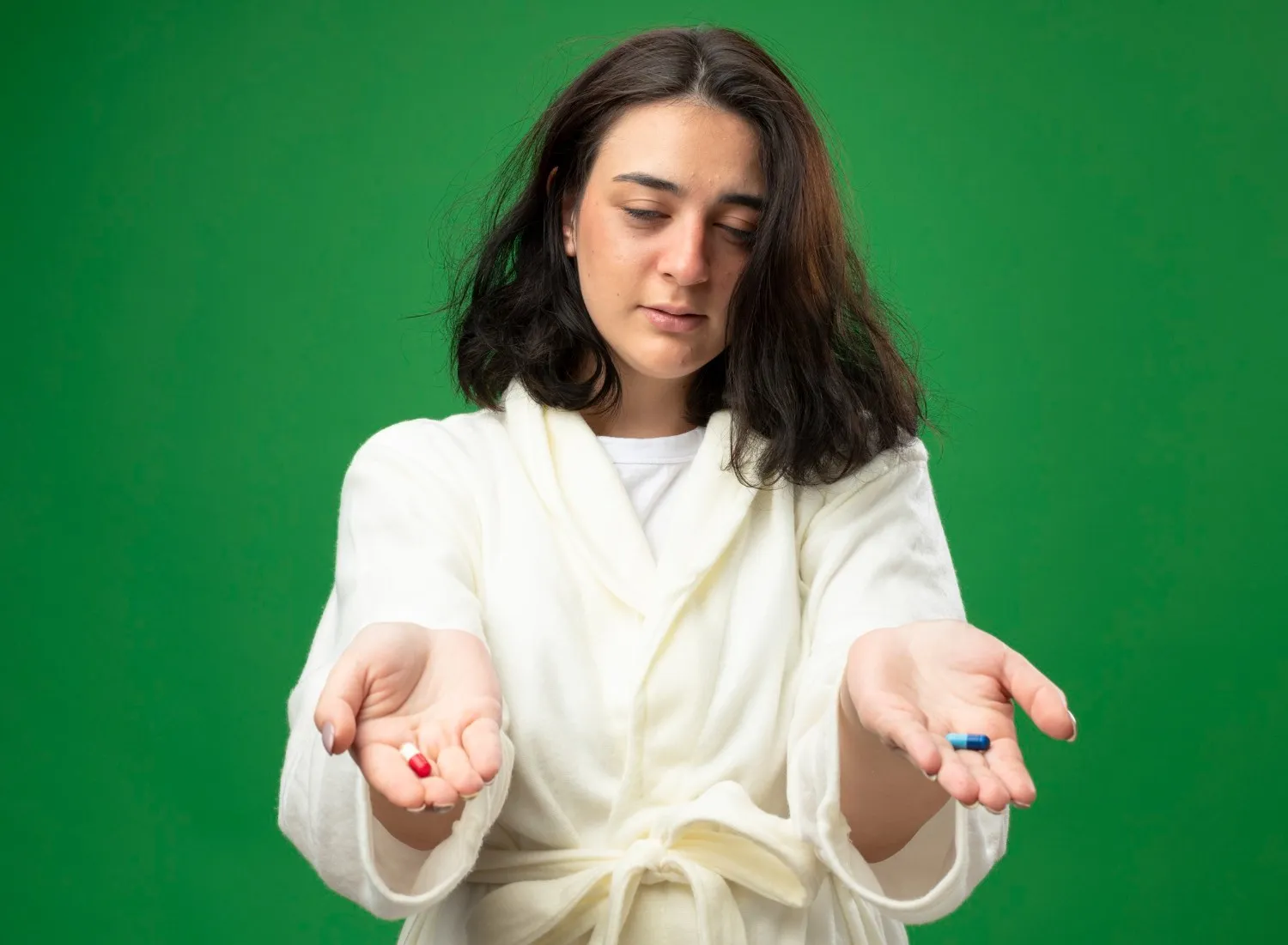

If you have PCOS, you have probably been offered a prescription before you finished explaining your symptoms.
The pill for your irregular cycles. Metformin for your insulin resistance. Spironolactone for acne and hair growth. Maybe all three at once, with a follow-up in six months.
And maybe that helped. Or maybe it helped while you were on it, and the moment you stopped, everything came back. The cycles went irregular again. The acne returned. The weight did not shift. And you started wondering whether the medication was treating your PCOS or just covering it.
That question is what brings most women to homeopathy. Not because they are against conventional medicine. But because they want to understand what the difference actually is, and whether there is a better option for their specific situation.
This blog tries to answer that honestly.
What Allopathy Does for PCOS
Conventional medicine, or allopathy, approaches PCOS primarily as a condition to be managed through symptom control. This is not a criticism. It reflects the structure of modern medicine. You present with a symptom, a mechanism is identified, and a drug is used to interrupt or override that mechanism.
For PCOS, that looks like this:
Oral contraceptive pills regulate the cycle by overriding the body's own hormonal signaling entirely. The pill introduces external hormones that produce a withdrawal bleed every month. This looks like a regular cycle. It is not. Ovulation does not occur. The root hormonal imbalance is not actually addressed, so once you stop taking the pill, irregular cycles often come back.
Metformin addresses insulin resistance by improving the body's sensitivity to insulin. This is a genuinely useful intervention, particularly in women suffering from PCOS and irregular periods, where there is a strong metabolic component. It can support weight management and, in some cases, improve the frequency of ovulation. However, it does not restore normal hormonal function on its own.
Anti-androgens such as spironolactone reduce the effects of excess androgens on the body. Acne clears. Facial hair reduces. Scalp hair may stabilize. Again, these improvements are real and meaningful. But they depend on continued medication. Stop the drug, and the androgen levels return.
Clomiphene or letrozole is used to induce ovulation for fertility purposes. They work, and for women trying to conceive, they are often the right choice. But they address fertility as a specific, time-limited goal rather than restoring the body's own ovulatory function over time.
The pattern across all of these is consistent. Conventional treatment for PCOS is effective at managing what is happening on the surface. It is not designed to change what is driving it underneath.
What Homeopathy Does for PCOS
Constitutional homeopathic treatment approaches PCOS differently. Rather than identifying a single mechanism to override, it works to understand the whole person, the way the hormonal imbalance is expressing itself, the metabolic picture, the stress and sleep patterns, the emotional state, and the individual physical characteristics that define how PCOS is presenting in this particular woman.
The remedy chosen is not a PCOS remedy. There is no such thing in classical homeopathy. The remedy is chosen for the person, based on the full constitutional picture. And the goal of the treatment is not to control symptoms while it is being taken. It is to shift the underlying hormonal environment so the body can regulate itself.
In practical terms, what this means for PCOS patients:
The menstrual cycle begins to normalize as ovulation becomes more regular. Not because an external hormone is triggering a bleed, but because the body's own hormonal signaling is being restored. Androgen-driven symptoms, such as acne, facial hair, and scalp thinning, reduce as androgen levels shift. Insulin sensitivity improves in conjunction with dietary support. Sleep improves. Mood stabilizes.
And when treatment ends after a defined period, the gains tend to hold because the body's own regulatory function has been restored rather than replaced.
That is the core distinction. Allopathy replaces the function. Homeopathy works to restore it.
Where Each Approach Falls Short
This is the part that most clinic websites skip. Both approaches have real limitations, and pretending otherwise does not serve anyone.
Where allopathy falls short in PCOS:
The biggest limitation is dependency. Most conventional PCOS medications work only while you take them. For a woman who is on the pill from eighteen to thirty-five, that is seventeen years of suppressed natural hormonal function. When she stops, her PCOS is waiting exactly where she left it, often with the added complication that her body has forgotten how to cycle on its own.
Conventional medicine also tends to address PCOS systems in isolation. The gynecologist manages the cycle. The dermatologist manages the skin. The endocrinologist manages the insulin. Nobody is treating the whole picture.
And the emotional and sleep components of PCOS, which are real, consistent, and significant, are rarely addressed within a conventional PCOS treatment plan at all.
Where homeopathy falls short in PCOS:
Homeopathy requires time. A hormonal condition that has been developing for ten years does not reverse in six weeks. Patients who come in expecting rapid results comparable to those of pharmaceutical intervention are often disappointed, and that disappointment is partly due to the practitioner's failure to set appropriate expectations.
Homeopathy also requires a skilled, experienced prescriber. The quality of the constitutional assessment directly determines the quality of the outcome. A poorly chosen remedy produces poor results. This isn’t something unique to homeopathy, but it’s important to be honest about it.
If you’re trying to conceive within a short time, the next few months, homeopathy alone may not be the quickest option. In such cases, it often makes more sense to combine conventional treatments for ovulation with homeopathic support, rather than waiting for the body to regulate naturally over a longer period.
And for women with significantly advanced metabolic disease, including established type 2 diabetes alongside PCOS, conventional metabolic management is not optional. Homeopathy can support the process, but it does not replace the need for medical oversight in complex metabolic cases.
The Honest Comparison
Rather than declaring a winner, the more useful question is: what does each approach actually do well?
Allopathy is effective at rapid symptom control, short-term fertility support, and metabolic management in complex cases. If you need your cycle regulated quickly for a specific reason, or you need ovulation induced for fertility treatment, conventional medicine does that reliably.
Homeopathy is effective at addressing the underlying hormonal dysregulation, restoring independent function over time, and treating the whole picture, including the metabolic, emotional, and sleep components that conventional treatment often leaves untouched. If your goal is to stop managing PCOS indefinitely and start resolving it, constitutional homeopathic treatment is the more appropriate approach, with realistic expectations about the timeline.
For many women, the right answer is not either/or. It is about understanding what each system does, using conventional medicine where its speed and specificity are genuinely needed, and using homeopathic treatment to address the underlying condition that conventional drugs manage but do not fix.
What Determines Which Right Is for You
A few things that consistently determine which approach, or which combination, is most appropriate:
How long have you had PCOS? Recent-onset PCOS in a woman in her early twenties responds differently from PCOS that has been managed with medication for fifteen years. The longer the duration, the more entrenched the underlying dysregulation, and the longer a constitutional approach takes to produce results.
Your current goals. If your immediate goal is fertility and your timeline is short, that shapes the conversation differently than if your goal is to stop taking the pill and have your body function independently.
Your medication history also plays a role. If you’ve been on oral contraceptives for a long time, they tend to suppress your body’s natural hormonal signals. While this effect is reversible, it can take some time for your system to adjust, which may slow the pace at which constitutional treatment starts showing results.
The degree of metabolic involvement. Mild insulin resistance responds well to homeopathic treatment alongside dietary changes. Established metabolic disease requires conventional oversight.
Your preference for how treatment works. Some women want rapid, predictable symptom control. Others want a treatment that works with their body rather than overriding it. Both are valid. What matters is that the choice is made with an accurate understanding of what each approach delivers.
A Note on Combining Both
It is worth saying clearly: choosing homeopathic treatment does not mean abandoning conventional medicine. Many patients at this clinic continue their conventional medications while beginning constitutional treatment, particularly if they are managing a metabolic condition or working toward fertility.
What often happens over time is that as the constitutional treatment takes effect, the need for pharmaceutical support reduces. Cycles that required the pill to be regular begin arriving independently. Androgen levels that needed medication to control normalize without it. The conventional medication burden gradually reduces under medical supervision as the body's own function improves.
That trajectory, from pharmaceutical dependence toward pharmaceutical independence, is the goal of constitutional homeopathic treatment. It does not always happen completely. But it happens consistently enough to make the approach meaningful for most PCOS patients.
Getting Help at Dr. Tathed's Homeopathic Clinic, Thane
If you have been managing PCOS conventionally and want to understand what homeopathic treatment can realistically add to your care, or if you are starting fresh and want to understand your options honestly, the right next step is a full constitutional assessment.
Dr. Tathed's Homeopathic Clinic has worked with hundreds of PCOS patients across Thane, Pune, Viman Nagar, and Chinchwad. For a complete overview of how PCOS is treated at the clinic, read the full PCOS treatment guide here. To book a consultation, visit drtathed.com or call +91 9405 435 981. Clinic hours are 8:00 AM to 9:00 PM.
Frequently Asked Questions
Can I take homeopathic treatment alongside my current PCOS medication? Yes. Most patients begin constitutional homeopathic treatment while continuing their conventional medications. The two approaches are not in conflict. As constitutional treatment takes effect and hormonal function improves, medication requirements are reviewed and reduced gradually under medical supervision. Nobody should stop prescribed medication abruptly without consulting their doctor.
How long before homeopathic treatment shows results for PCOS? Most patients with moderate-duration PCOS begin to notice changes in cycle regularity, skin, and energy within three to five months of consistent constitutional treatment. Full hormonal independence, when achievable, typically takes eight to fourteen months. Cases with longer duration or significant metabolic involvement take longer. A realistic timeline is discussed at the first consultation based on the individual case.
Is allopathy bad for PCOS long-term? Not bad, but limited. Conventional PCOS medication works while it is taken and provides real, meaningful symptom relief. The limitation is that it does not address the underlying hormonal dysregulation that drives PCOS. Long-term use of oral contraceptives suppresses natural hormonal function for the duration of use, which can make the eventual restoration of independent function more complex. This is a clinical reality worth knowing, not a reason to dismiss conventional medicine outright.
If homeopathy does not work for me, can I still go back to conventional treatment? Yes, always. Beginning homeopathic treatment does not close any doors. If constitutional treatment does not produce the results you hoped for within a realistic timeline, conventional management remains available. The two approaches are not mutually exclusive, and a responsible homeopath will tell you clearly when conventional intervention is the more appropriate choice for your specific situation.
References
Indian Journal of Medical Research: Prevalence of PCOS in Urban India (2022)
Journal of Human Reproductive Sciences: CAM Use in PCOS (2021)
LocalCircles Pan-India Survey on Medical Side Effects (April 2025)